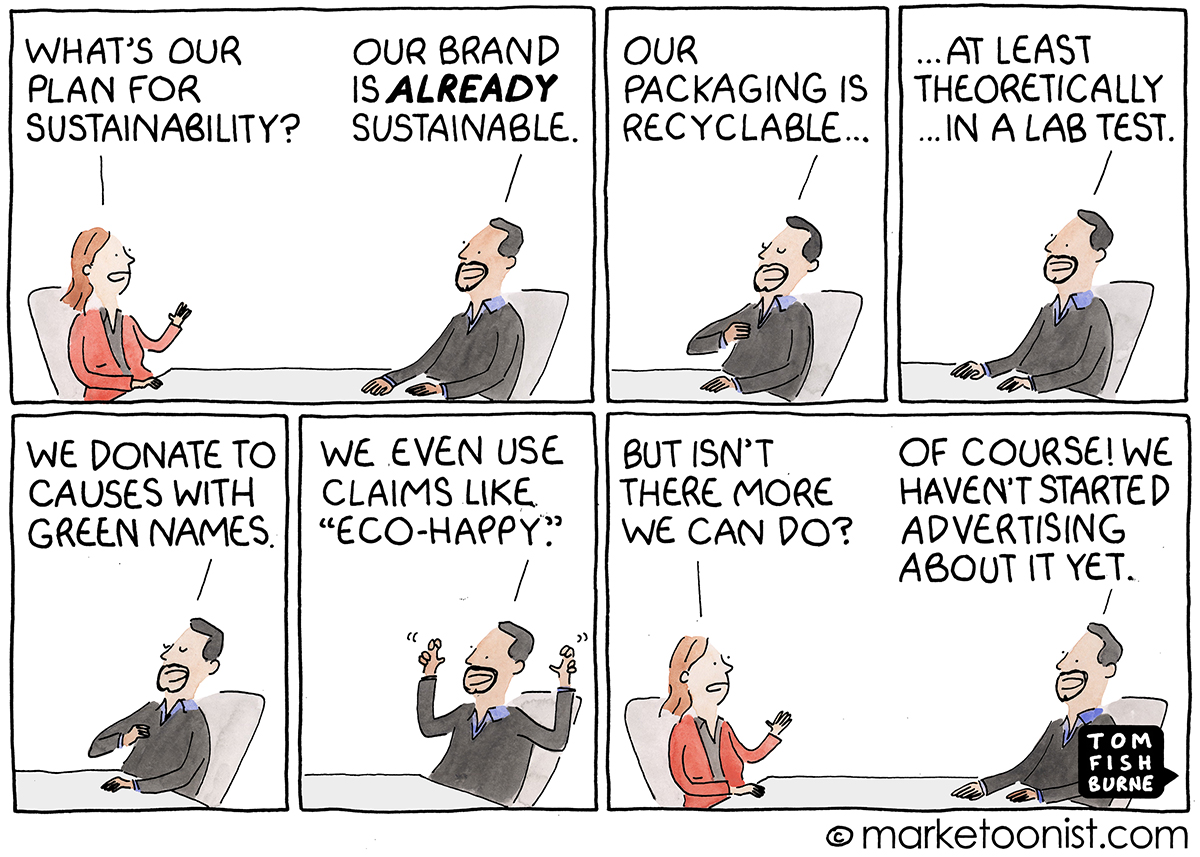
EcoVeritas CEO David Harding-Brown recently observed: “Sustainability as an umbrella term is becoming meaningless; a series of macro statements that consumers can no longer relate to or engage with.” A consumer protection group called ICPEN recently found that 42% of sustainability claims made by brands online were “exaggerated, false, or deceptive.” In 1983, an undergrad named Jay Westerveld coined the term “greenwashing” after seeing a “reuse your towel to help save the environment” card in a Fiji hotel that was simultaneously doing a construction expansion in a sensitive environmental area. In the 40 years since, greenwashing as a practice […]
Paid licensing options include a high-resolution download.
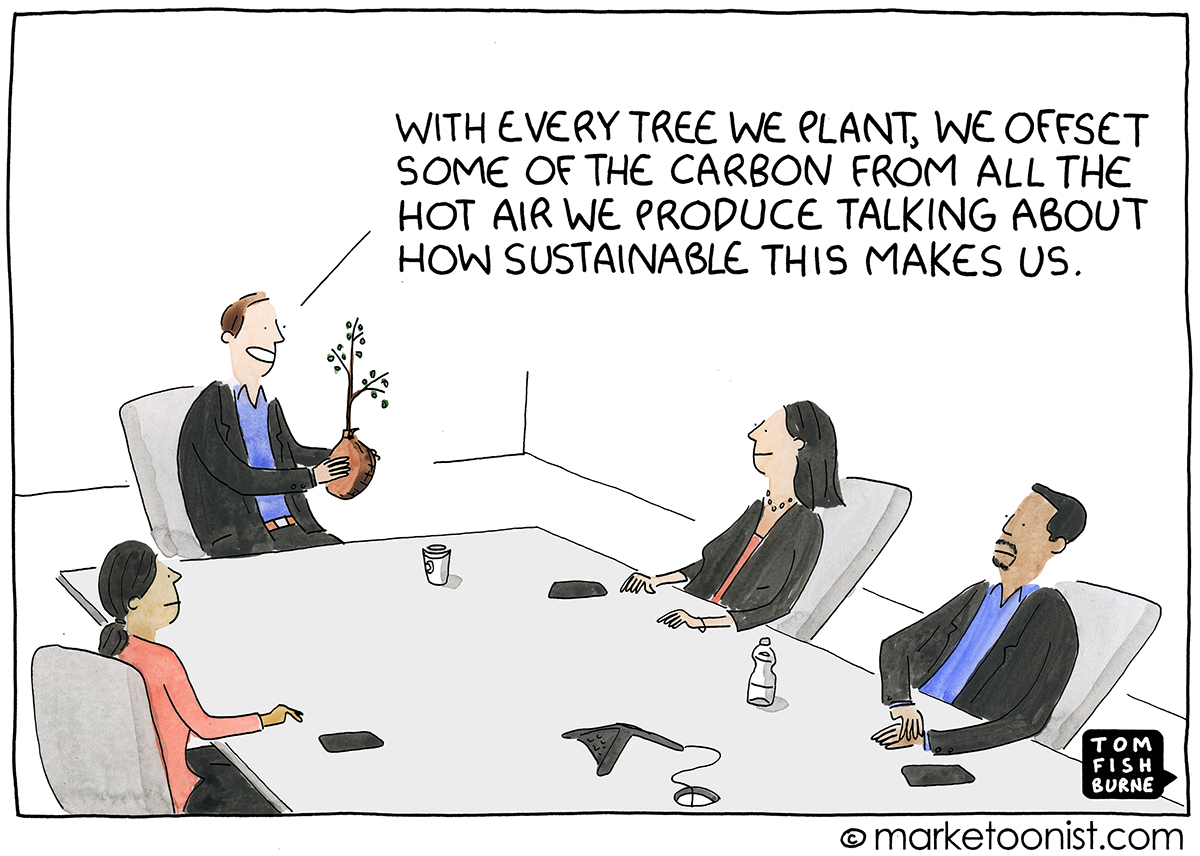
Consumers increasingly look for sustainability credentials in the brands they buy. And yet, whenever brands talk about sustainability, consumers are increasingly sensitive to green-washing and hypocrisy. Google caught flak most recently for hosting a climate change summit on the coast of Sicily a few weeks ago, when it came out that over 100 of the celebrity attendees turned up in private planes and superyachts. I like how Allbirds CMO Julie Channing recently talked about the rise of companies embracing sustainability: “The good news is the sustainability conversation is happening. The bad news is now many businesses think they […]
Paid licensing options include a high-resolution download.
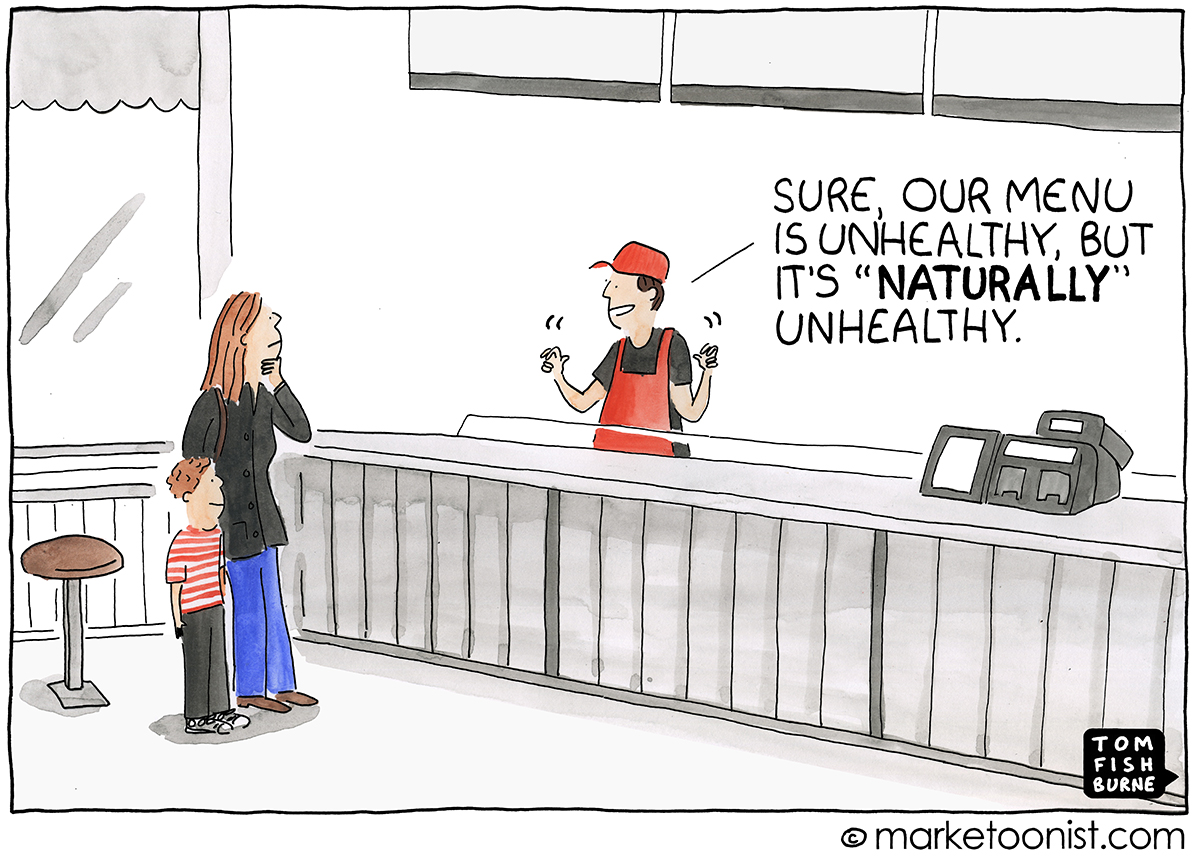
It’s a tricky time to be a food marketer — navigating the Wild West of consumer expectations and unregulated food claims like “natural.” According to the most recent Consumer Reports Survey, 73 percent of consumers seek out foods labeled as “natural”. But, “natural” is not a legal or regulated term. The FDA signaled a few years ago that it would eventually provide some clarity, but marketers are currently operating in a grey area. There’s been a push the last few years toward “clean labeling” in traditional processed foods. Brands are revamping their ingredient decks toward simplicity. At the same time, […]
Paid licensing options include a high-resolution download.
It’s a tricky time to be a food marketer. Consumers are scrutinizing more than ever to what goes into the foods they buy. And what constitutes “healthy” to consumers is in flux. The FDA recently announced that it will be calling out “added sugar” on nutrition labels in the future. It is estimated that 68% of processed foods contain added sugars. “It’s going to really surprise people who go to organic and whole foods stores, when they find that all this natural food they’ve been buying is full of added sugar,” said Barry Popkin, UNC professor and author of a […]
Paid licensing options include a high-resolution download.
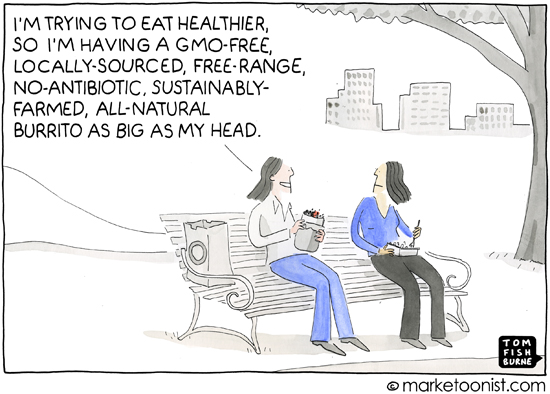
It’s a tricky time to be a food marketer. How consumers define what it means to be “healthy” is in flux. As a food marketing friend pointed out, consumers are increasingly prioritizing food purity over calorie count. Chipotle is the poster brand for the current state of health positioning. They’re taking a leadership role in progressive stances like GMO-free and sustainable sourcing. And this obscures the fact that an average meal at Chipotle packs a whopping 1,070 calories, close to a full day’s worth of salt, and 75% of a day’s worth of saturated fat. A Chipotle burrito has more […]
Paid licensing options include a high-resolution download.
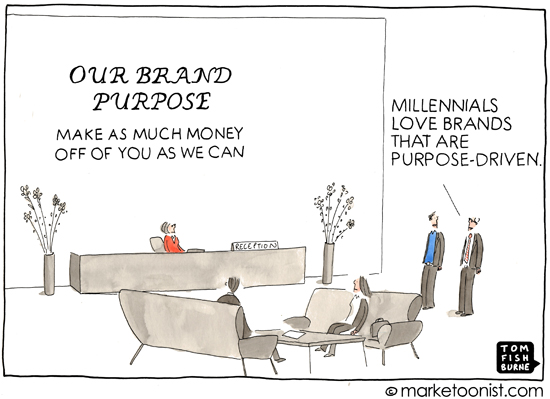
Partly to appeal to Millennials, many brands are reframing what they do to sound purpose-driven. Many marketers are feeling pressure to define their “brand purpose” and create campaigns with a higher cause. The more brands that jump on the purpose bandwagon, however, the more that consumers will be skeptical and cynical about companies’ motivations, even if their motivations are sincere. Chipotle has been leading with brand purpose for several years with its powerful message to “Cultivate a Better World” (The Scarecrow last month and Back to the Start in 2011). Chipotle is one of the more successful companies in branding […]
Paid licensing options include a high-resolution download.
My wife showed me a Grazia article the other day that announced belt-tightening as this season’s eco chic. It told the story of a cocktail party where everyone attempted to one-up each other on bargain purchases. It then described European discount chain ALDI as nouveau fashionable. It made me think about the role of ethical brands in a down economy, which I’ve touched on before. How will ethical brands fair when everyone is counting their pennies (particularly brands that command a premium)? In a funny way, some of this recessionary climate may actually force even greater consumer change in relation […]
Paid licensing options include a high-resolution download.
John Grant prompted this cartoon idea recently when he shared an anecdote that a client had posed this very question to an agency John knew. This is the end result of many companies and brands treating sustainability solely as a marketing benefit, not as an underlying business practice. For years, many companies have given their agencies "green briefs" to find something green to talk about. This explosion in greenwashing makes "green" feel like a fad. And we all know fads come and go. Which is sadly ironic, given that sustainability is a much deeper commitment than, say, promising a low […]
Paid licensing options include a high-resolution download.
The other day on the tube, I saw an ad for a new 50% recycled range of pens from Pentel. It showed a photo of a polar bear stranded on melting ice. Next to the polar bear in distress, there were cartoon ice bergs and ice caps drawn by Pentel pens. The implication was that buying these pens could help stop global warming, halt the melting of the ice caps, and save the poor polar bear. It was only missing a tearful Sally Struthers. Pentel’s move to 50% recycled content is a pretty big step (particularly at the same consumer […]
Paid licensing options include a high-resolution download.
I picked up a book recently called Shades of Green, which has a spectrum of eco tips for people based on how green they consider themselves, from dark green to light green. It made me think about the different motivations for people thinking green and I thought it would be fun to play with a few stereotypes. There’s the classic hippy crunchy granola end of the spectrum, where any form of consumerism is bad and should make you feel guilty. There tends to be a lot of sacrifice involved, which can turn off the vast majority who don’t particularly like […]
Paid licensing options include a high-resolution download.
I took my family camping on a goat's milk farm a few months ago and asked the farmer what he thought about organic farming. He said that organic foods were a "rich man's luxury". It got me thinking about the impact of a recession on ethical consumerism. As consumer's start squeezing their pocketbooks, how will this affect brands with a social mission that also carry a premium? A friend was visiting from the states last week and mentioned that Target was down, but Wal-Mart was up, which made me wonder how consumers are starting to re-evaluate their shopping lists. I […]
Paid licensing options include a high-resolution download.
I just started reading John Grant’s Green Marketing Manifesto, a thought-provoking book on how marketers like us should approach the green marketplace. I’m only 56 pages into it, but I recommend it and the accompanying blog too. We’re at an interesting turning point. Greenies and marketers used to be diametrically opposed, because the traditional eco mantra was "consume less" and the traditional marketing mantra was "consume more". But now, it’s more about "consume smarter". And the roles of the greenies and marketers are blurring. Marketers play an important role in helping explain all of this to consumers. Instead of dragging […]
Paid licensing options include a high-resolution download.
I came across an article on the environmental ills of outdoor media: lots of paper, lots of fuel to drive to media sites, toxic glues, etc. The next time I rode the tube, I was struck by how many outdoor ads were touting some environmental benefit. I put the two together and it felt very ironic, and inspired this cartoon. The trouble with much of the environmental grand-standing right now is that it tends to focus on one attribute or another, not a holistic approach of making a company more sustainable over time. So, there’s often more than a bit […]
Paid licensing options include a high-resolution download.
A few weeks ago, I was lucky to meet Michael Braungart (who co-wrote the thought-provoking book Cradle to Cradle about ecological product development). He helped expand our thinking about eco responsibility to being less about one attribute or another, and more about a holistic approach of thinking through the past, present, and future of every product. In the group discussion, it came up that someday environmental responsibility won’t be a marketing position, it will be an aspect of product quality in each and every product. Until then, we’re in a really confusing stage where just about any product can claim […]
Paid licensing options include a high-resolution download.
A few days ago, I met the head of sustainability for a British retailer, and he said he was conflicted about carbon labeling. There’s a big push here to add a numeric carbon footprint to all consumer products (starting with a big announcement from Tesco last year). It seems like a good disclosure in spirit, and the sheer effort to measure the carbon footprint is a good thing, which leads to ideas on how to reduce that footprint. But, labeling on packaging is a complicated one for consumers. For one thing, it’s confusing. Do consumers really understand what a 75g […]
Paid licensing options include a high-resolution download.
Another cartoon on the theme of greenwashing. I came across this article in Ad Age about companies getting caught by consumers committing "green murder". It talked about marketers putting out "green briefs" to agencies to find something worth talking about their environmental impacts without actually changing anything. In this rush to reposition everyday brands as environmentally-friendly, there seems to be collective amnesia of the inconsistencies in the story. And by being so vocal (particularly as a johnny-come-lately), these brands are actually quite naked and exposed. It's only a matter of time before a consumer calls out, "but he has nothing […]
Paid licensing options include a high-resolution download.
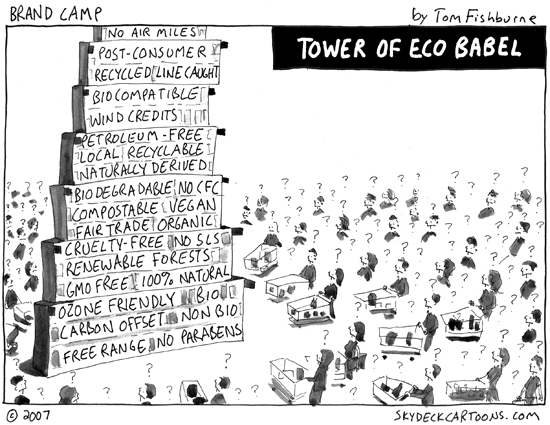
I find many eco labels incredibly confusing (and I’m probably a lot closer to them than the average consumer). Because there are few regulatory standards, there seem to be a lot of “eco labels of the week”. Even the standard ones are confusing, as you can see when the Vegan Society recently withdrew its certification from Ecover, because they consider “no animal testing” to include a variety of 0.2mm long water flea. Of course, it’s all quite complex and there are no easy answers. But I think the resulting “claim race” is creating a maddeningly confusing grocery aisle. Also, so […]
Paid licensing options include a high-resolution download.
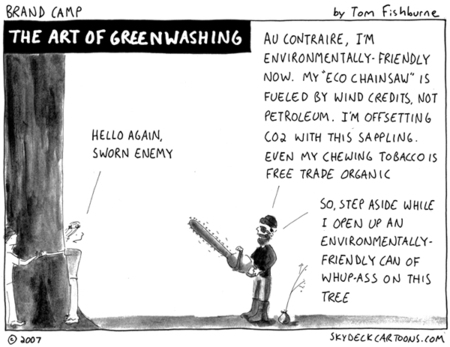
This cartoon idea sprang fully formed from a New York Times piece on the ridiculous lengths that some brands are going to be considered for the Home Depot Eco Options promotion (including, yes, a brand of electric chainsaw). It’s a good example of some of the outlandish greenwashing we’re all starting to see. And, how the issue is not as white and black as the old treehugger/lumberjack dynamic. Of course, any lumberjack research wouldn’t be complete without re-watching the classic Monty Python sketch (particularly now that I’m living in the UK). It mystifies me that my wife doesn’t find Monty […]
Paid licensing options include a high-resolution download.