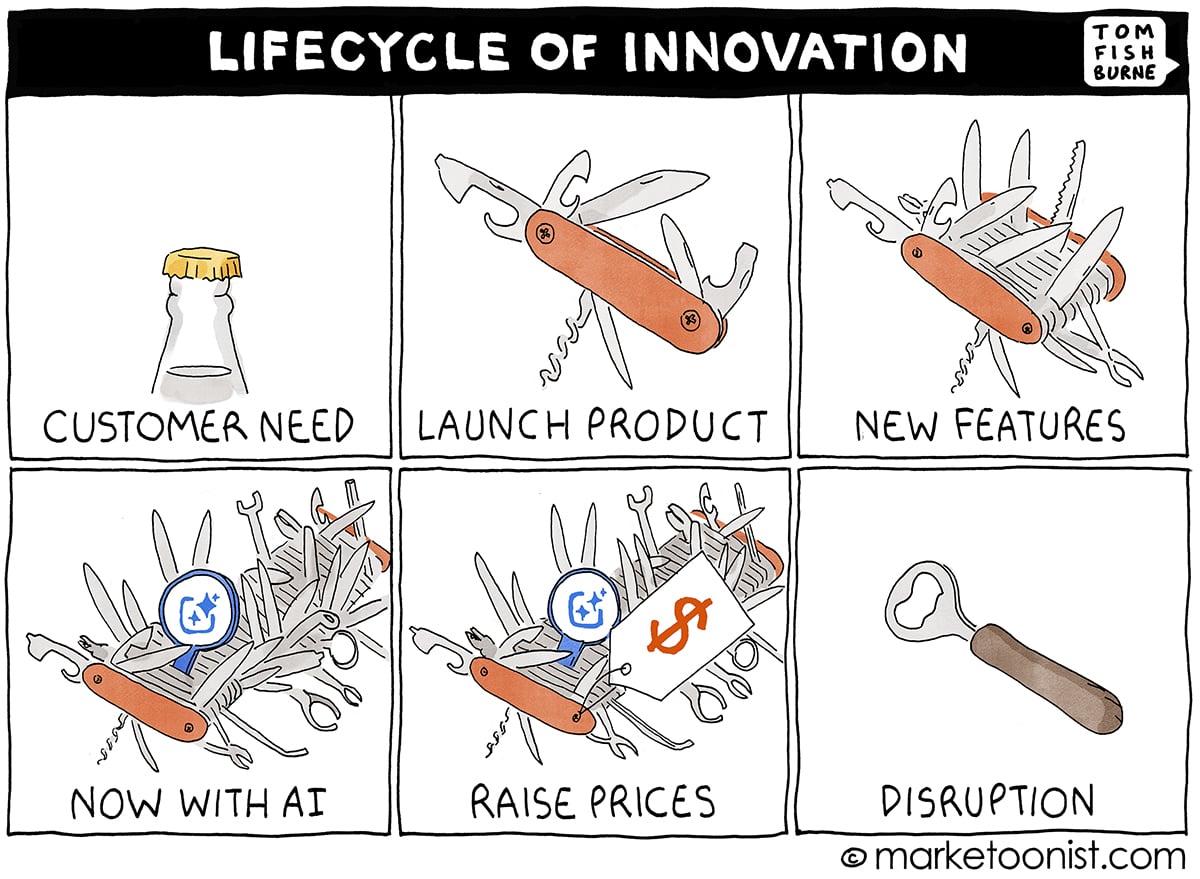
I drew this week’s cartoon thinking about two common innovation pitfalls: feature creep and over-serving the market.
A company starts by meeting a customer need. Then it adds features to chase more profitable customers upmarket. Eventually it outstrips what the average customer needs or wants to pay for. A low-end disruptor comes along, and customers switch.
Zoom is a classic case in point. When it launched, it disrupted bloated enterprise incumbents like Skype for Business or Cisco Webex. But Zoom has since become the bloated incumbent, rebranding as an “AI-first work platform” with an AI Companion, meeting summaries, and other tools the average customer doesn’t need or want to pay for.
Email newsletters are another example. The once-disruptive Mailchimp grew into a full marketing automation suite for larger businesses, opening the door for newsletter-focused platforms like Beehiiv.
Now Beehiiv is turning itself into an all-in-one media platform with podcasts, communities, websites, and an AI copilot. Last week it announced a major price hike to pay for it all, sending some customers to look for the next low-end alternative.
One of the high points of business school for me was taking Clayton Christensen’s class a few years after he published The Innovator’s Dilemma. He coined the term “disruptive innovation” and gave us the theory for this lifecycle.
What struck me most from his course and book is that management isn’t being stupid or irrational by following this well-worn path.
Unlike Cory Doctorow’s model of “enshittification,” where managers knowingly extract value from customers until the product degrades, the managers in Christensen’s model are making good decisions based on the incentives in front of them.
That’s what makes it a dilemma.
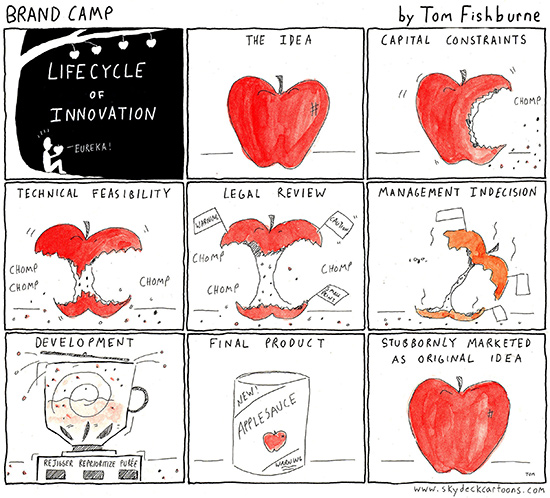
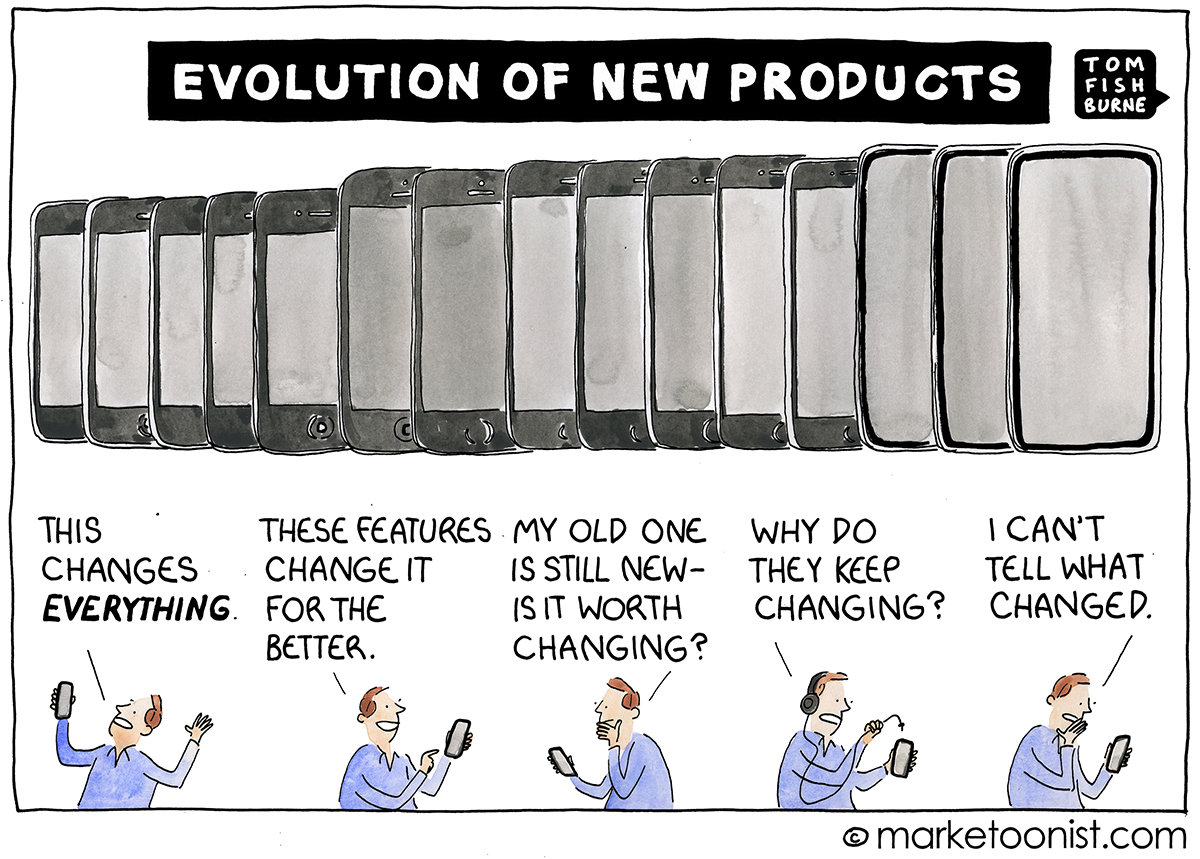
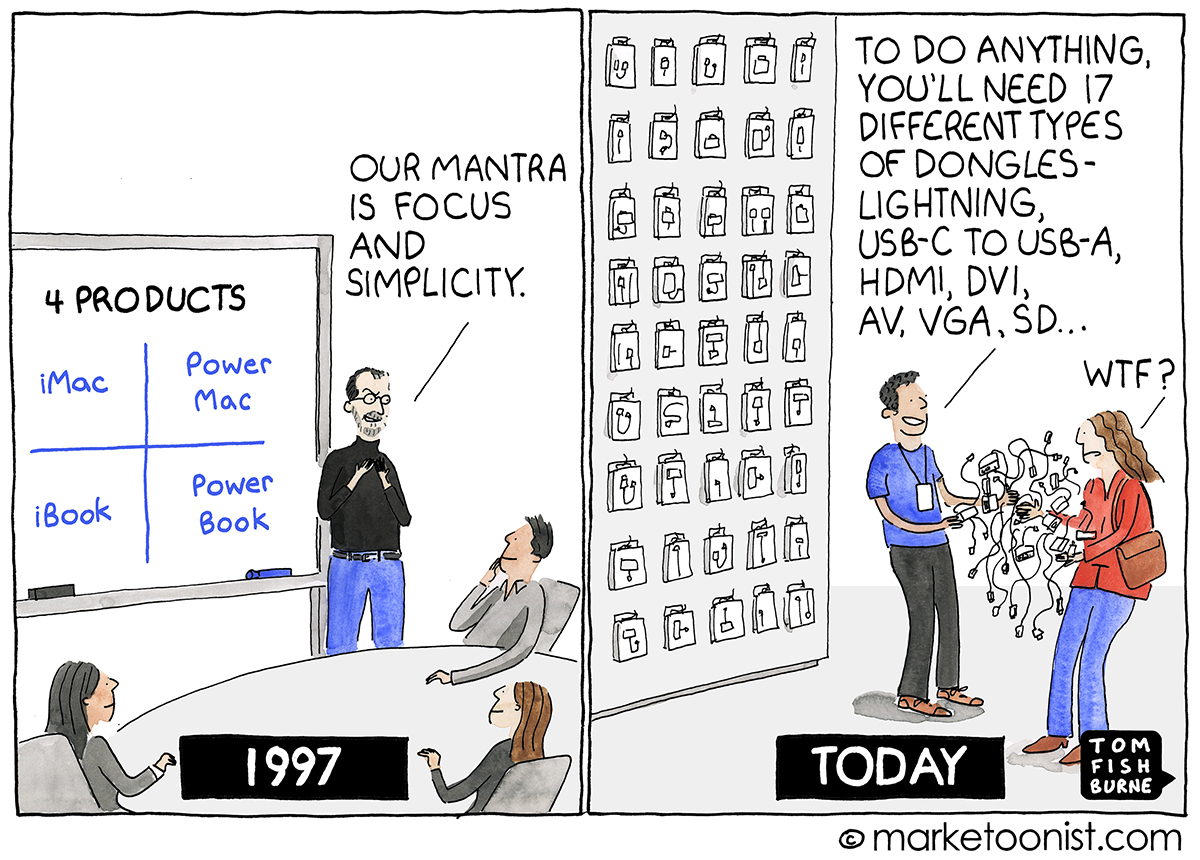
Here are a few related cartoons I’ve drawn over the years: