This cartoon was partly inspired by reading someone described as the MD of EMEA at VMLY&R, part of WPP. I’ve always found it funny that some of the most successful ad agencies have some of the least imaginative names. The alphabet soup names of many agencies are hard to tell apart, and could be easily mistaken for law firms. And yet, their job is literally to help clients manage and grow their own brands with originality and creativity. Many ad agency names are last initials of once pedigreed last names, with the notable exception of WPP (which I learned […]
Paid licensing options include a high-resolution download.
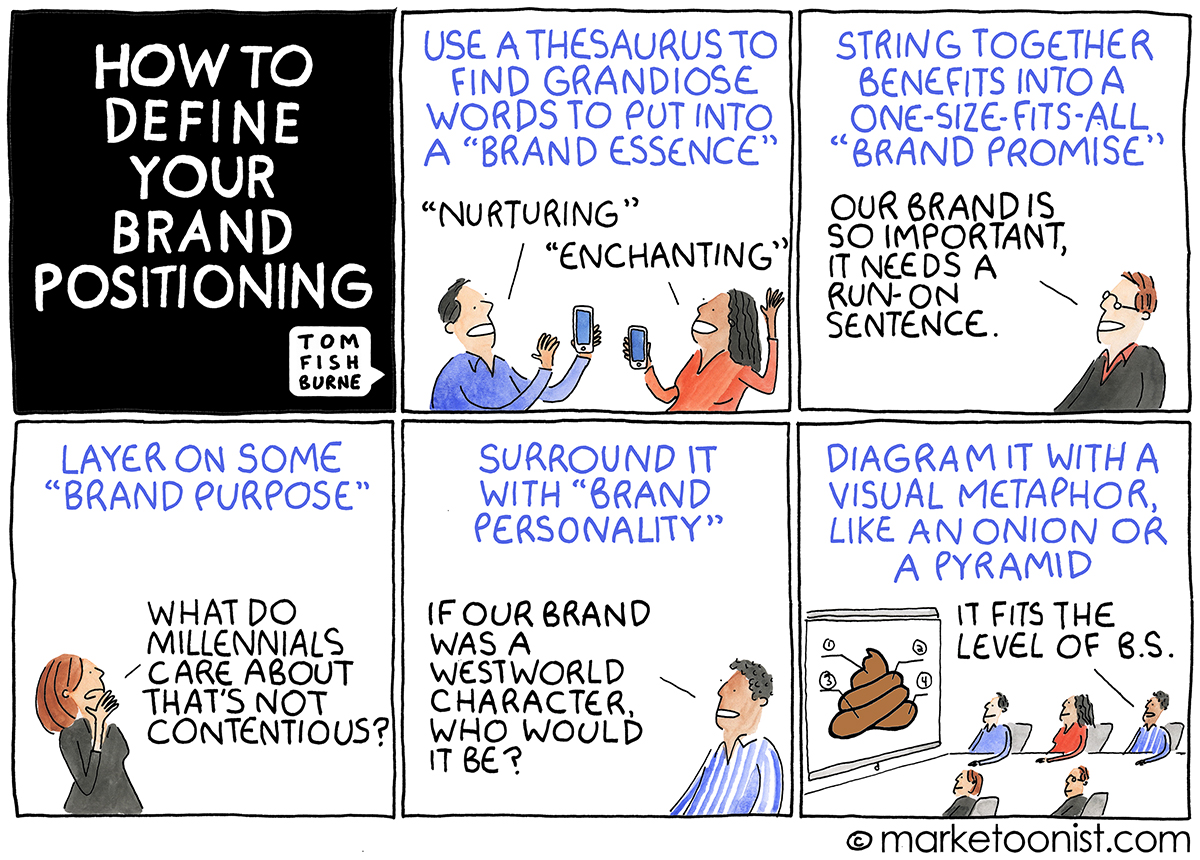
I find few things as silly in the world of marketing as the classic Brand Onion. The Brand Onion goes by many names — Brand DNA, Brand Architecture, Brand Wheel, Brand Key, etc. — but it’s basically a one-page synopsis of a brand, collectively word-smithed by the marketing team. In theory, a Brand Onion is a simple tool that can be shared with anyone involved in the brand that immediately captures what the brand is all about. In practice, the Brand Onion often says more about the marketing team than it does about the brand. They can be self-indulgent, inflexible, […]
Paid licensing options include a high-resolution download.
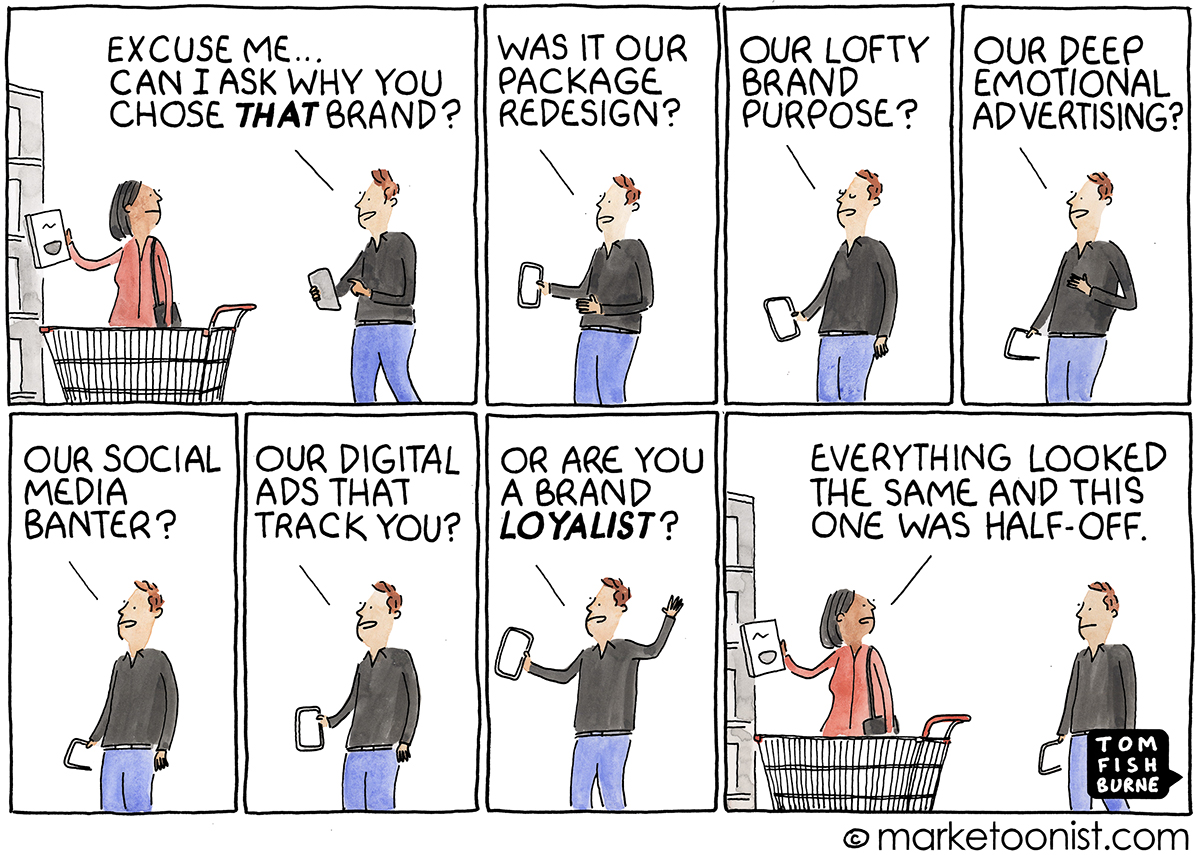
When I worked on the method brand from 2006-2010, we often talked about about trying to stand out in a “sea of sameness.” Like many aisles in the grocery story, household cleaning was dominated by brands that looked and sounded alike — same stock bottle packaging, same messaging, same product benefits, same designs, same claims. There was very little differentiation or distinctiveness. As a small challenger brand team with a tiny budget, we realized method would never be able to “out-Clorox Clorox.” So method focused on being different. That was its reason for being. This was a constant battle, […]
Paid licensing options include a high-resolution download.
Faris Yakob wrote an interesting piece last year on what motivates consumers to buy, particularly in the few seconds a consumer spends at shelf. He wrote: “In 2005 P&G coined the term “first moment of truth” to describe the importance of packaging in their marketing model. The first point of contact is encountering an advertisement, the second is when they take an action towards the brand such as visiting a store or searching the web, the third is when they find it. “Then all prior brand communication comes to bear on a single moment: the three to five seconds when […]
Paid licensing options include a high-resolution download.
Brand style guides are traditionally visual. When brand interactions are increasingly screenless, how do brands stand out? How do brands show their identity in a world of sound? Several brands have recently announced new sonic branding strategies in the last year, including HSBC, Coca-Cola, and MasterCard. MasterCard CMO Raja Rajamannar said that agencies asked if he “was smoking something” when he first shared a brief to develop a brand identity without visuals. But after two years of development with musicians and branding experts, they recently introduced a whole new sound identity that will be part of how the brand communicates […]
Paid licensing options include a high-resolution download.
As marketers, it’s easy to lose touch with what consumers and customers actually experience with our brands. In the bubble of our marketing offices, writing strategy decks and brand architecture documents, we sometimes over-inflate the role our brands play in peoples’ lives. I once interviewed for a job with a senior executive at Apple. He told me that every Saturday, he worked a secret two-hour shift at his local Apple store. He wouldn’t tell shoppers about his primary day job. On Saturdays, he was just one of many Apple employees helping shoppers buy products. He said it helped keep his […]
Paid licensing options include a high-resolution download.
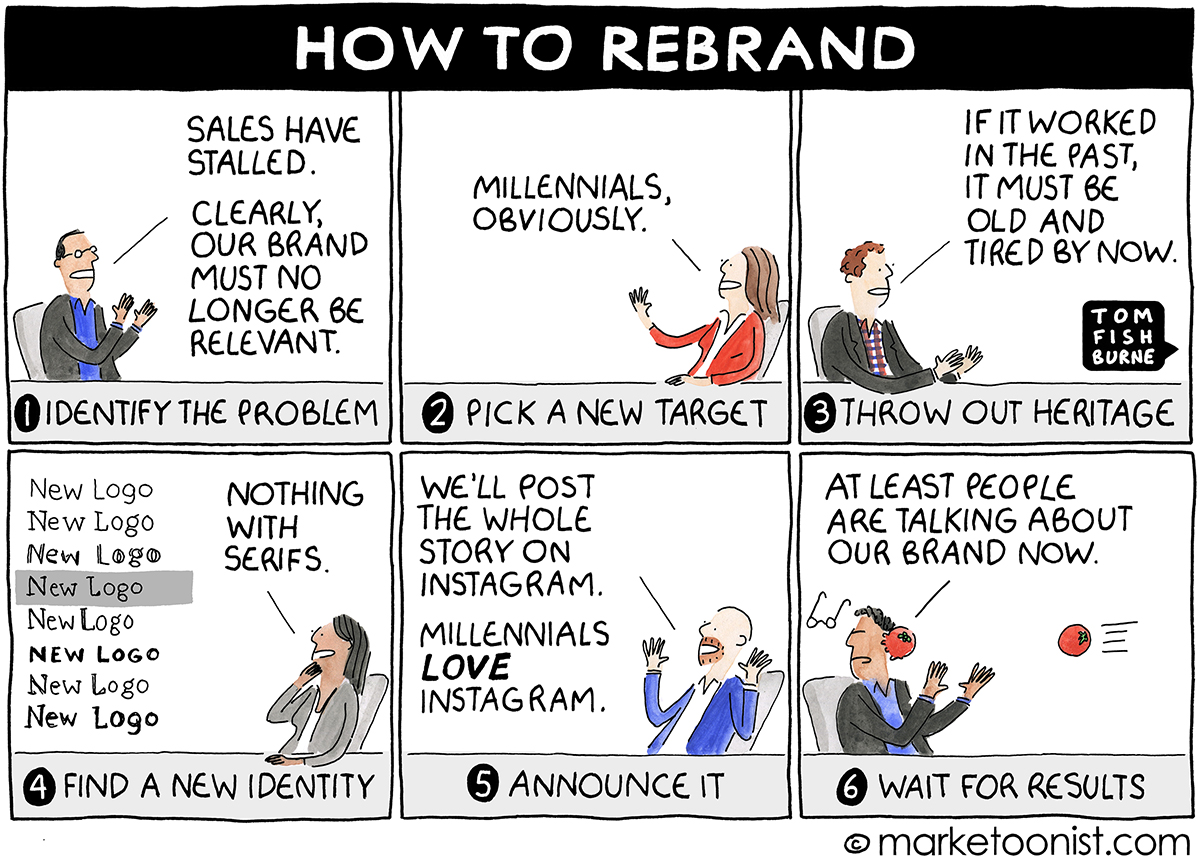
Burberry announced a new visual identity a few weeks ago. After only a 4-week design process, they dramatically shed 162 years of brand heritage for something entirely new, which they unveiled on Instagram. The largely negative fallout that resulted (conveniently enshrined in the comments of the same Instagram post) reminded me how Mark Ritson once described rebranding: “[Rebranding is] the most asymmetrical corporate strategy of them all. There is literally no upside of a nice new logo; there is only pain if you get it wrong. And inevitably it goes wrong a lot of the time.” Rebranding is a tempting […]
Paid licensing options include a high-resolution download.
Creating a lifestyle brand is catnip to marketers. Many brand teams find it irresistible to try to elevate and stretch their brands as far as they will go, occasionally losing sight of the actual consumer in the process. Lifestyle branding gone awry can lead to a phenomenon that David Taylor coined as “Brand Ego Tripping.” Levi’s suits and Colgate Ready Meals are textbook cautionary tales of Brand Ego Tripping. It has been fascinating to watch Taco Bell pursue a lifestyle brand strategy the last few years. They not only extended into consumer products and revamped their stores, they even launched […]
Paid licensing options include a high-resolution download.
A clear, concise positioning statement is the starting point of branding and marketing. It creates consistency when consumers see an ad, pick up a product, talk to a salesperson, or visit a store. Yet many positioning efforts are far from clear and concise. Encapsulated in elaborate diagrams as brand onions, brand keys, brand pyramids, brand architectures, brand unicorns, etc., the positioning statements of many brands spin out concentric circles of complexity. They may look substantial tacked to the wall or attached to a creative brief, but they frequently fall short in guiding actual decision-making. We should be able to hand […]
Paid licensing options include a high-resolution download.
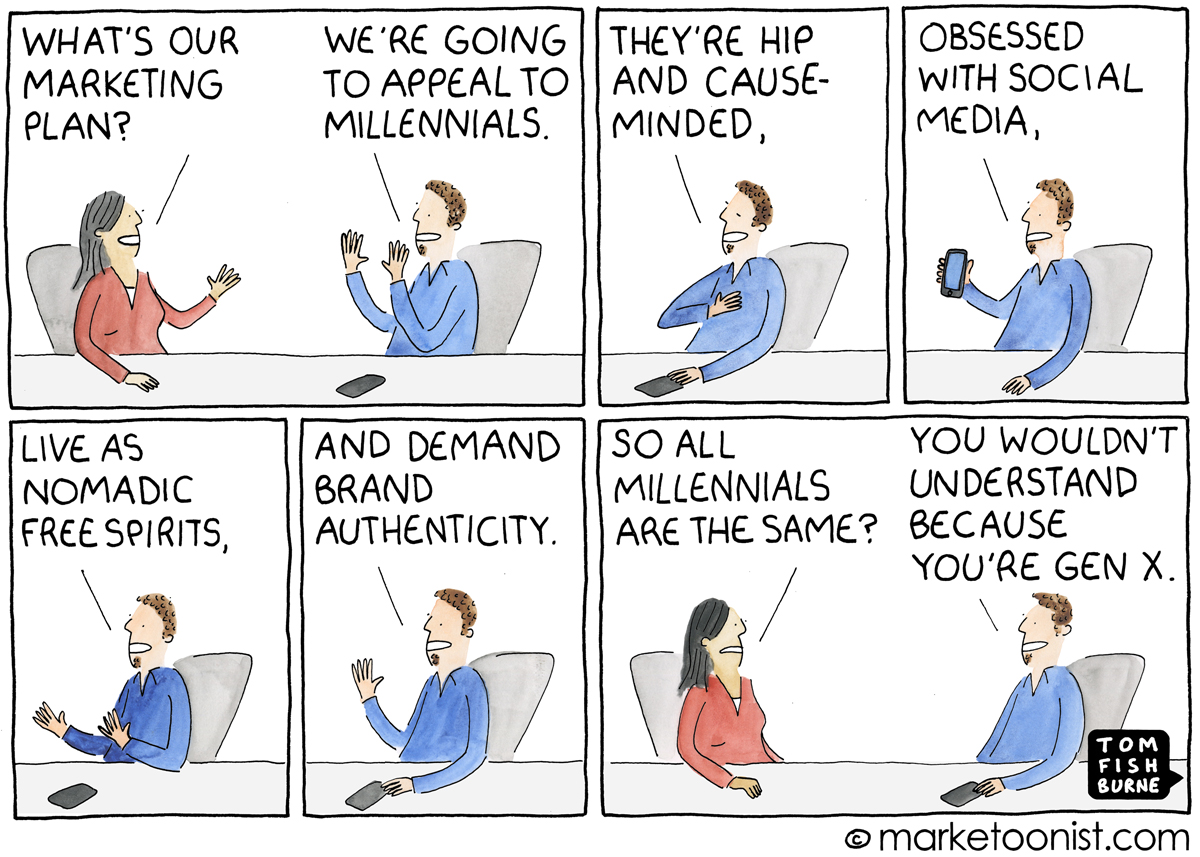
Marketers often fall into the trap of treating generations as monoliths. The topic, “How to Appeal to Millennials”, has appeared on many a conference agenda and marketing plan, often accompanied by a stereotypical checklist of what defines a millennial mindset and what it takes for brands to resonate with them. I like how Mark Ritson frequently skewers this practice. Here’s a takeaway from a recent article in Marketing Week called “Only crap marketers mistake stereotypes for segments”: “The whole myth of the millennial segment makes a mockery of just about every principle of basic segmentation. Clearly millennials as a generational […]
Paid licensing options include a high-resolution download.
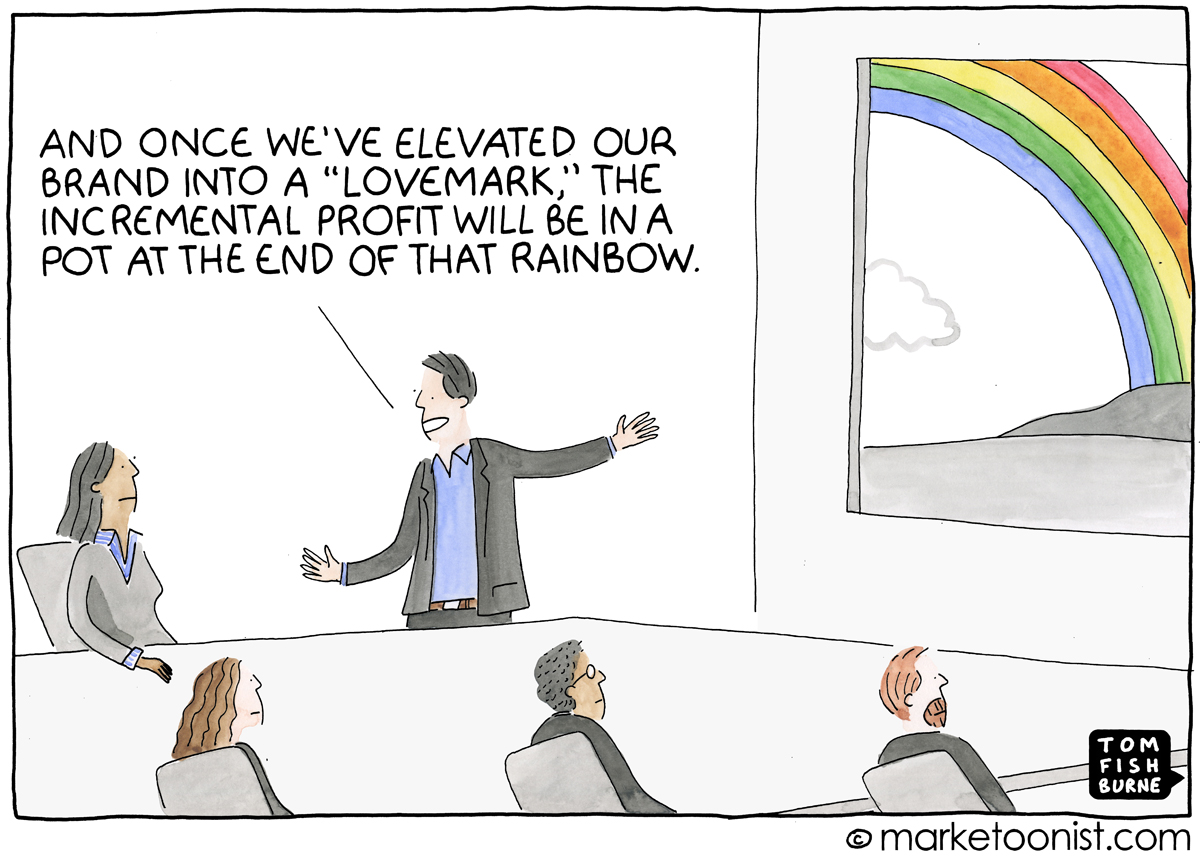
Marketing is full of myths, anecdotes, and long-held beliefs of what drives growth. I think part of our job as marketers is to continually question these assumptions. It’s easy for marketers to get entranced by the idea that consumers will fall in love with our brands. Former Saatchi & Saatchi CEO Kevin Roberts coined the term “Lovemark” in 2005 and popularized the idea that the aim of marketing was to cultivate “loyalty beyond reason.” This idea continues to drive marketing strategy, despite the lack of evidence to back it up. Marketers frequently exaggerate the importance of their brands in consumers’ […]
Paid licensing options include a high-resolution download.
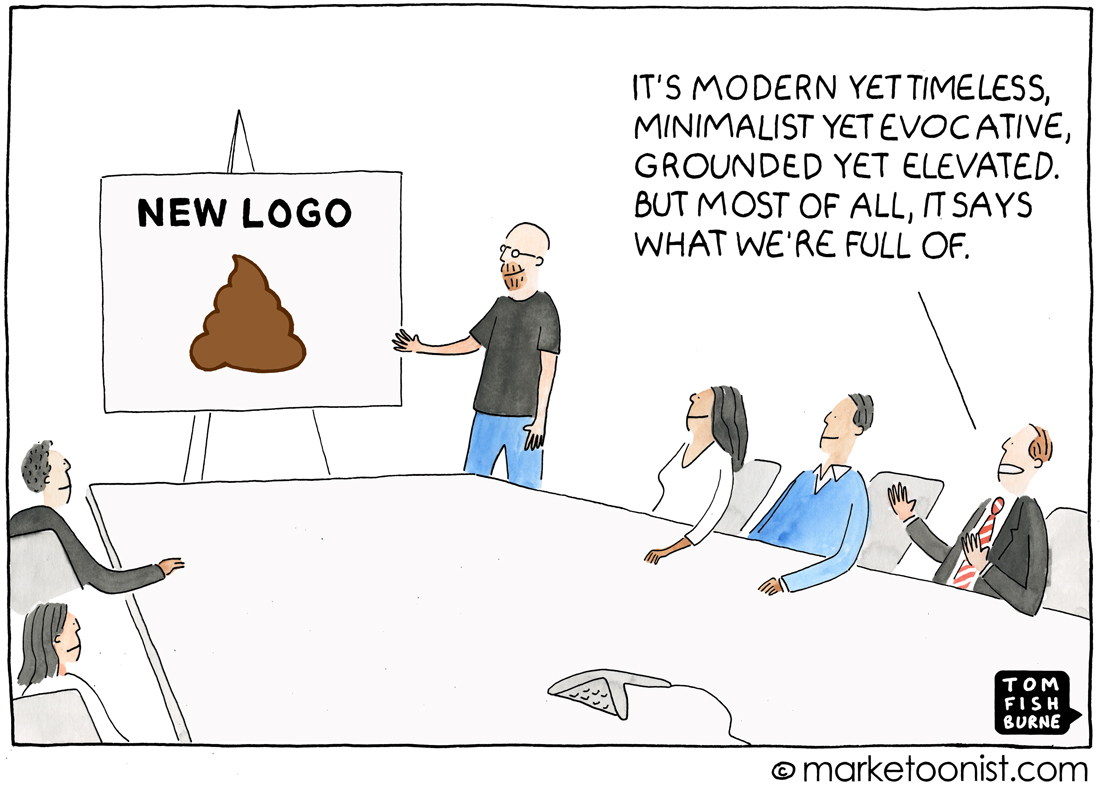
Instagram caught a lot of flak for its rebranding last week, but it’s only the most recent in a string of companies that have gone through brand makeovers. Uber, Airbnb, and Yahoo each debuted new brand identities in the last couple years that were widely lampooned. The biggest rebranding cautionary tales remain Tropicana in 2009, which backtracked after sales dropped by 20%, and Gap in 2010, which reverted to its old logo after just 6 days of criticism. What cracks me up the most about rebranding efforts is the self-indulgent way that brand teams can articulate what went into them. […]
Paid licensing options include a high-resolution download.
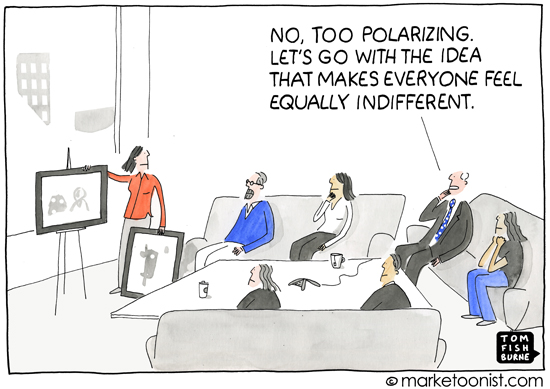
Labeling an idea polarizing can be the marketing kiss of death. Businesses often avoid ideas that are polarizing, whether new products, ad campaigns, or promotions. It’s always easier to launch the next flavor of vanilla. But there’s power in polarization. If you try to appeal to everyone, you won’t necessarily appeal to anyone in particular. In a world of clutter, the last effect a brand can afford to create is indifference. The poster brand of polarization is Marmite, the classic yeast food spread in the UK. Their brand platform is literally, “love it or hate it,” an insight they’ve been […]
Paid licensing options include a high-resolution download.
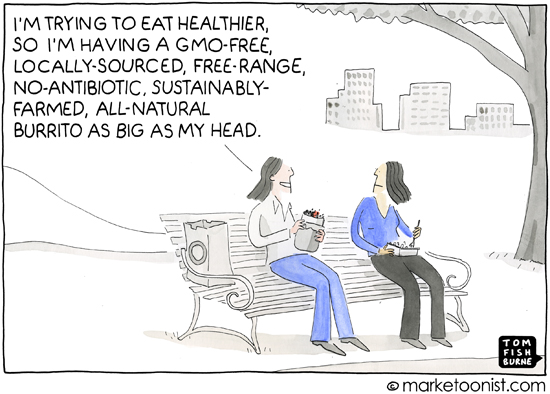
It’s a tricky time to be a food marketer. How consumers define what it means to be “healthy” is in flux. As a food marketing friend pointed out, consumers are increasingly prioritizing food purity over calorie count. Chipotle is the poster brand for the current state of health positioning. They’re taking a leadership role in progressive stances like GMO-free and sustainable sourcing. And this obscures the fact that an average meal at Chipotle packs a whopping 1,070 calories, close to a full day’s worth of salt, and 75% of a day’s worth of saturated fat. A Chipotle burrito has more […]
Paid licensing options include a high-resolution download.
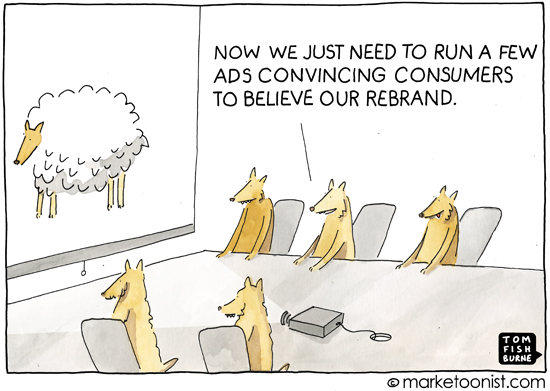
Brand teams are quick to rebrand when they hit a rough patch. But they sometimes forget that a brand is more than a company name, logo, tagline, or ad creative. And that a shiny new brand identity won’t automatically solve all of the problems of the business. The marketing world is littered with failed rebranding initiatives (from the Gap to Tropicana) that illustrate one simple truth about branding. A company doesn’t own a brand. It’s consumers do. Giving a brand a new coat of paint (or dressing it in sheep’s clothing) won’t change consumers feelings and expectations of a brand. […]
Paid licensing options include a high-resolution download.
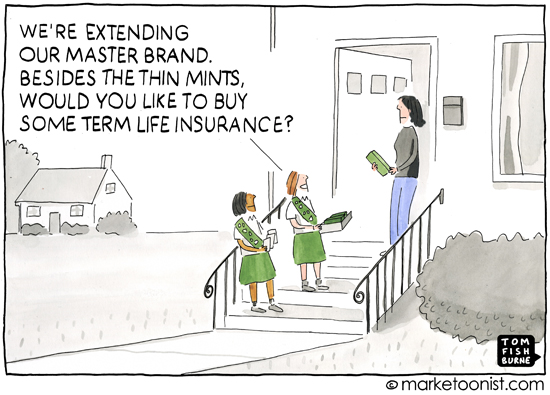
It’s an irresistible temptation for marketers to see how far their brands can stretch. In the endless search of brand growth, extending into new categories as a master brand can seem like a slam dunk. As the brand consultancy Prophet put it: “Most companies can simultaneously manage budgets and invest in their growth by strategically extending their master brands into new categories. Why? For one, the assurance of a familiar brand provides comfort and inspiration in times like these. Plus, consumers are seemingly more comfortable letting brands extend into new categories than most brand managers are. Finally, investing in a […]
Paid licensing options include a high-resolution download.
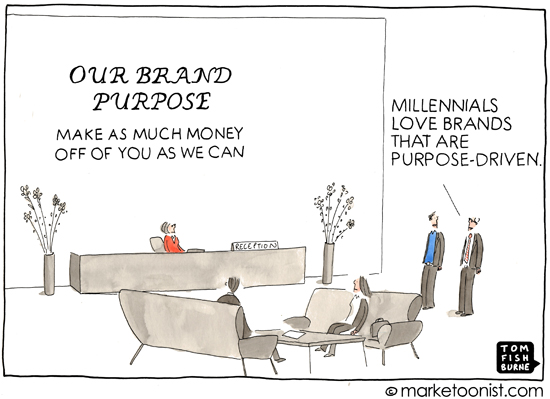
Partly to appeal to Millennials, many brands are reframing what they do to sound purpose-driven. Many marketers are feeling pressure to define their “brand purpose” and create campaigns with a higher cause. The more brands that jump on the purpose bandwagon, however, the more that consumers will be skeptical and cynical about companies’ motivations, even if their motivations are sincere. Chipotle has been leading with brand purpose for several years with its powerful message to “Cultivate a Better World” (The Scarecrow last month and Back to the Start in 2011). Chipotle is one of the more successful companies in branding […]
Paid licensing options include a high-resolution download.
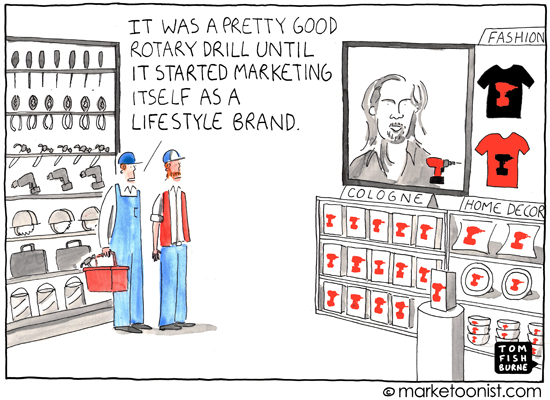
Many brands aspire to become lifestyle brands. Lifestyle brands are seen as the pinnacle of marketing. Marketers elevate these brands beyond functional attribute to higher-order benefits. Consumers express their identities through these brands. This strategy promises differentiation and growth. One of the reasons that method succeeded was its positioning as a lifestyle brand in the commodity category of household cleaning. Method wasn’t just a hand wash or a shower cleaner. It was a lifestyle brand that stood for something greater. Yet the pursuit of becoming a lifestyle brand can also lead brands astray. It can give brands a false sense […]
Paid licensing options include a high-resolution download.
“People don’t buy what you do, they buy why you do it,” Simon Sinek famously said. Marketers are all taught to define a “brand promise”. The deeper opportunity is to understand our “brand purpose” – an ideal that drives everything a brand does. Purpose is increasingly part of a marketer’s vocabulary, yet many brands take a tick-box approach. They may confuse purpose with signing on to a cause-marketing event. They may attempt to ladder up their brand benefits, yet come across as shallow as a bumper sticker. Former P&G CMO Jim Stengel, along with Milward Brown, studied 50 purpose-driven brands. […]
Paid licensing options include a high-resolution download.
At the heart of a great marketing story is usually a “single-minded proposition”, or SMP. The SMP sums up the most important thing you can say about the brand or product. It ignites creative briefs and serves as a rally cry for marketing communication. Most single-minded propositions resemble a peace treaty more than a rally cry however. Marketers cram in every benefit that fits, leading to 80-word run-on sentences. Often the SMP is political, with different members of the brand team lobbying for different features. The easiest solution is just to tack them together with commas, semicolons, and “ands”. The […]
Paid licensing options include a high-resolution download.