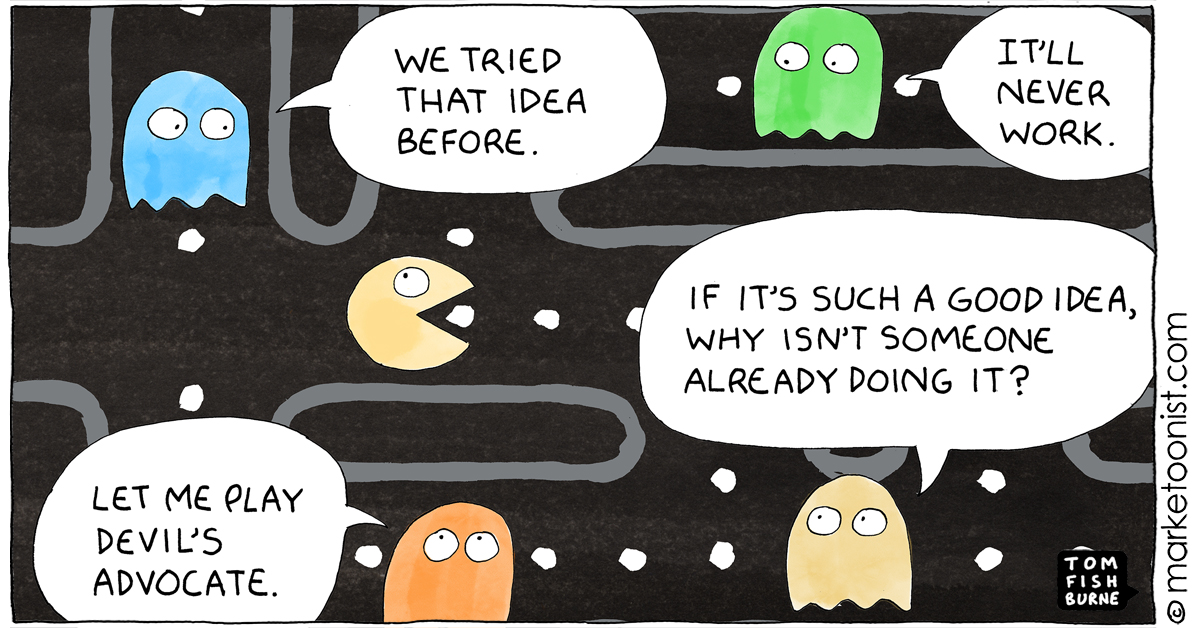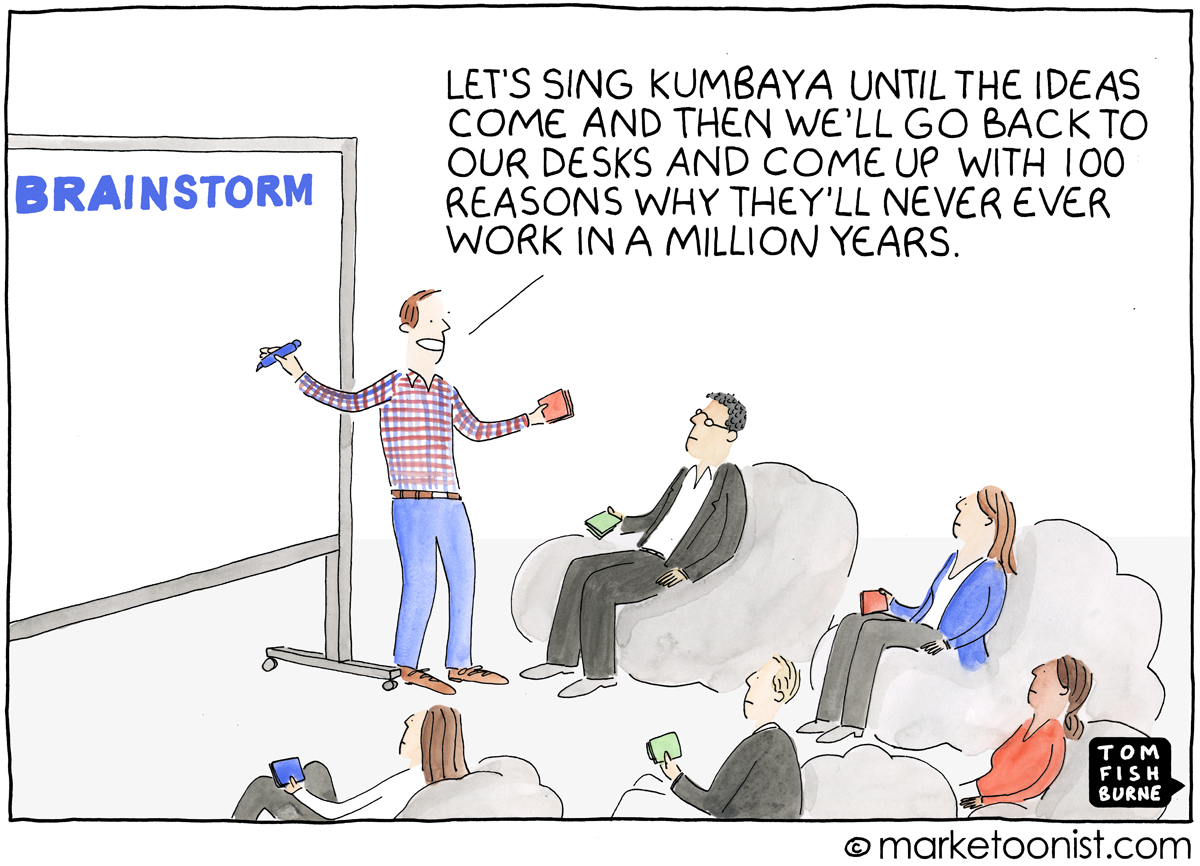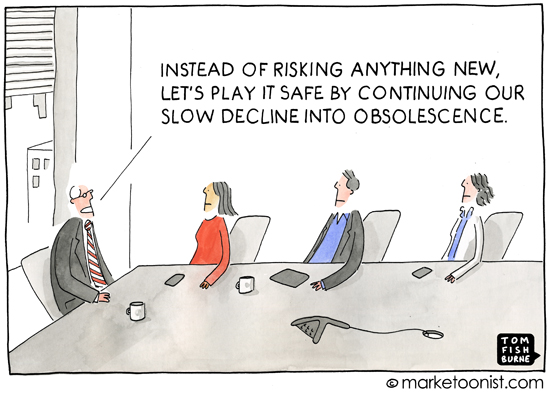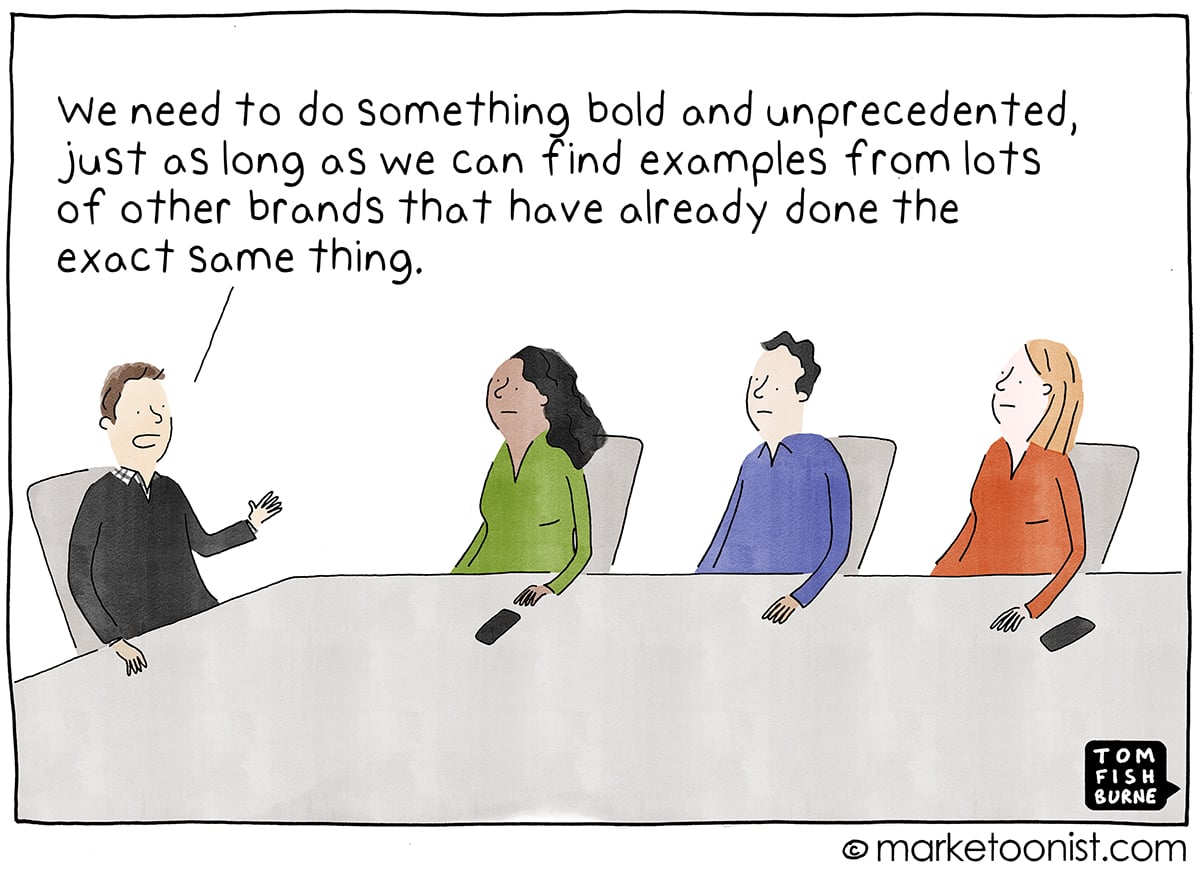
I drew this week’s cartoon on a paradox I keep seeing in innovation.
Henry Ford famously said:
“I invented nothing new. I simply assembled the discoveries of other men behind whom were centuries of work.”
Ford’s original motor company cribbed ideas and inspiration everywhere from Singer sewing machines to P&G to Chicago slaughterhouses. Those borrowed innovations set the stage for a whole new approach to manufacturing.
Stanford GSB professor Stefanos Zenios and Ken Favaro explored Ford’s approach as a case study in what they called “Precedents Thinking” in an HBR article last year.
Their key thesis is that past innovation is raw material for new innovation. Precedents show what’s possible, reduce risk, and give leaders the confidence to act.
And yet, in practice, precedents often get used less to inspire what’s possible, than as a permission slip to do anything at all. This creates a kind of innovation theater.
Relying only on precedents can lead brands to doing the same thing over and over again.
That tension to be “unprecedented with precedents” is at the heart of innovation. The best innovation borrows selectively and builds on what it finds. The worst just borrows.
Here are a few related cartoons I’ve drawn over the years: