

Disney alum Paul Williams once shared the brainstorming method developed by Walt Disney. Disney used to separate the act of coming up with and executing ideas into three distinct steps (and associated mindsets): The Dreamer, The Realist, and The Spoiler.
As Paul wrote:
“By compartmentalizing the stages, Walt didn’t let reality get in the way of the dream step. The realist was allowed to work without the harsh filter of a spoiler. And, the spoiler spends time examining a well-thought idea… something with a bit more structure.
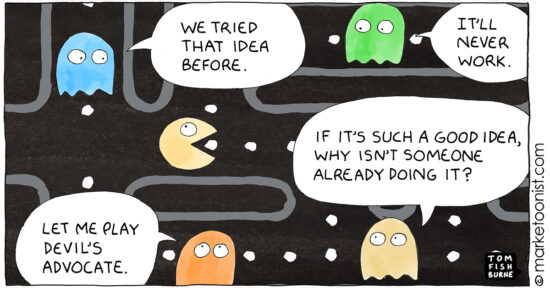
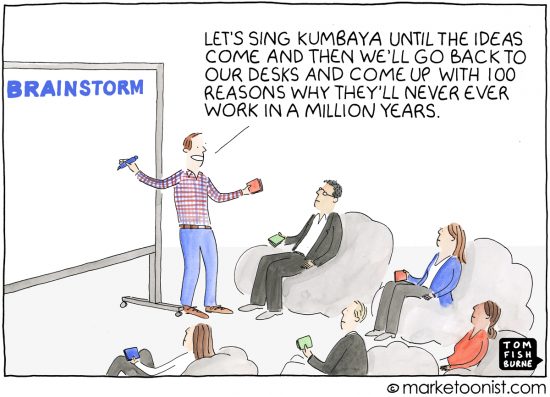
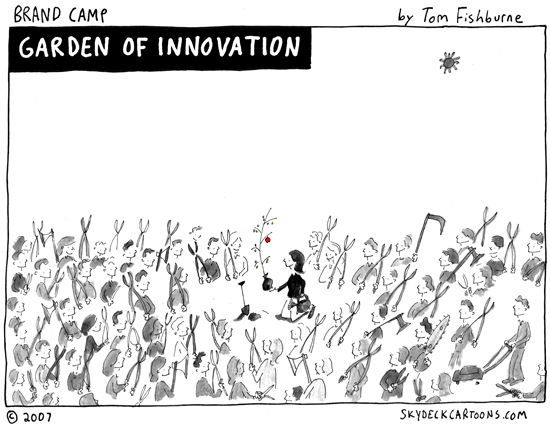
“When we brainstorm alone and in groups – too often – we tend to fill the room with a dreamer or two, a few realists, and a bunch of spoilers. In these conditions, dream ideas don’t stand a chance.”
The Dreamer mentality specializes in blue sky thinking without constraints, the Realist mentality puts practical structure to the ideas, and the Spoiler asks the hard questions and kicks the tires. We need all three mindsets. But we need those mindsets at the right time and in the right way.
Walt Disney would go so far as to dedicate different physical rooms to each mindset. These rooms helped prompt what mindset was required at each stage. They helped ensure that innovation remained both creative and practical.
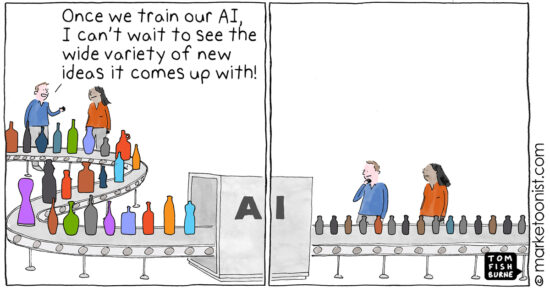
I’ve been thinking about these stages and mindsets in the context of AI. Several studies (including new research at Wharton) have shown that while Generative AI can help boost the quality of individual ideas, they can also limit the diversity of ideas. There can be a “Great Same-ening,” as Ian Whitworth once put it.
As the Wharton study’s authors wrote:
“The true value of brainstorming stems from the diversity of ideas rather than multiple voices repeating similar thoughts…
“Diversity is often overlooked, but it needs special protection. If you don’t solve for it explicitly, you won’t get it.”
Part of the challenge and opportunity of incorporating AI into innovation is deciding what collaborative roles we want humans and AI to play. Assigning roles like The Dreamer, The Realist, or The Spoiler could be a way to start.
AI alone won’t create a culture of innovation.
Here are a few related cartoons I’ve drawn over the years:
The signup form could not load. Subscribe here instead.