In 2000, there was an influential experiment on the paradox of choice. Columbia and Stanford psychologists Sheena Iyengar and Mark Lepper set up two displays of jam jars at a grocery story. One display featured 24 jam varieties and the other only six.
The result, as Barry Schwartz famously chronicled his 2004 book “The Paradox of Choice,” was a revelation. Shoppers were 10 times more likely to buy jam when they were shown just the six varieties, instead of 24. Too many options lead to “overchoice” or “choice overload.”
Worse, even when shoppers ultimately bought something, they felt decision fatigue and regret they may have chosen wrong.
As Barry put it:
“Learning to choose is hard. Learning to choose well is harder. And learning to choose well in a world of unlimited possibilities is harder still, perhaps too hard.”
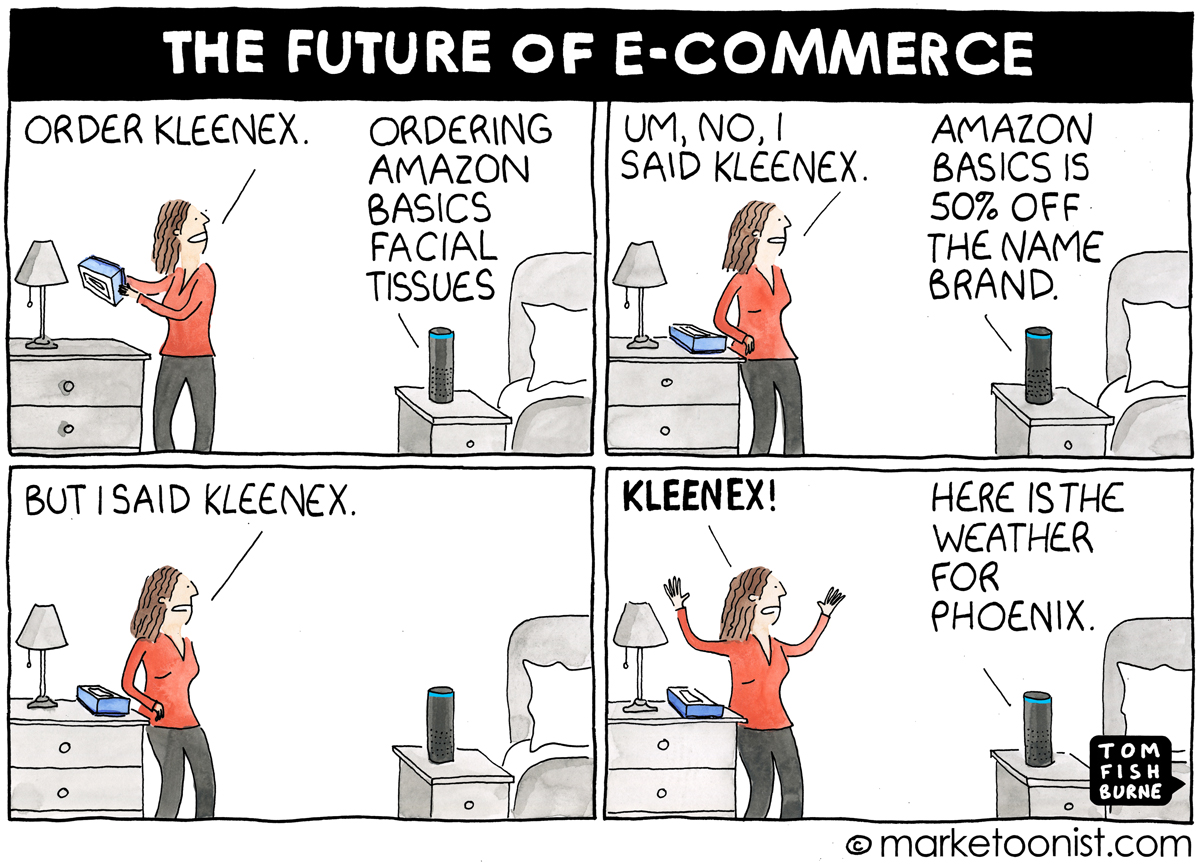
Twenty-five years later, the idea of facing only 24 varieties seems quaint. Online shopping today is an infinite jam jar display for just about everything.
I was struck by this recent observation from Rory Sutherland, Vice Chairman of Ogilvy UK:
“One reason I often buy second-hand cars is that the decision is usually easier: do I want this car or not? When configuring a new car, I am sometimes literally and metaphorically blinded by the headlights. Do I want to spend an extra £500 on active-matrix LED technology, or would I prefer the ventilated seats?
“You can present consumers with too many acceptable choices, creating paralysis in place of decisiveness.”
That presents huge opportunities for curators — brands that aim to simplify the shopping experience.
Technology can help. Some retailers like Etsy are starting to use AI specifically designed to present a smaller, better list of search results. eBay helped pioneer visual search where shoppers can upload images to find exact items.
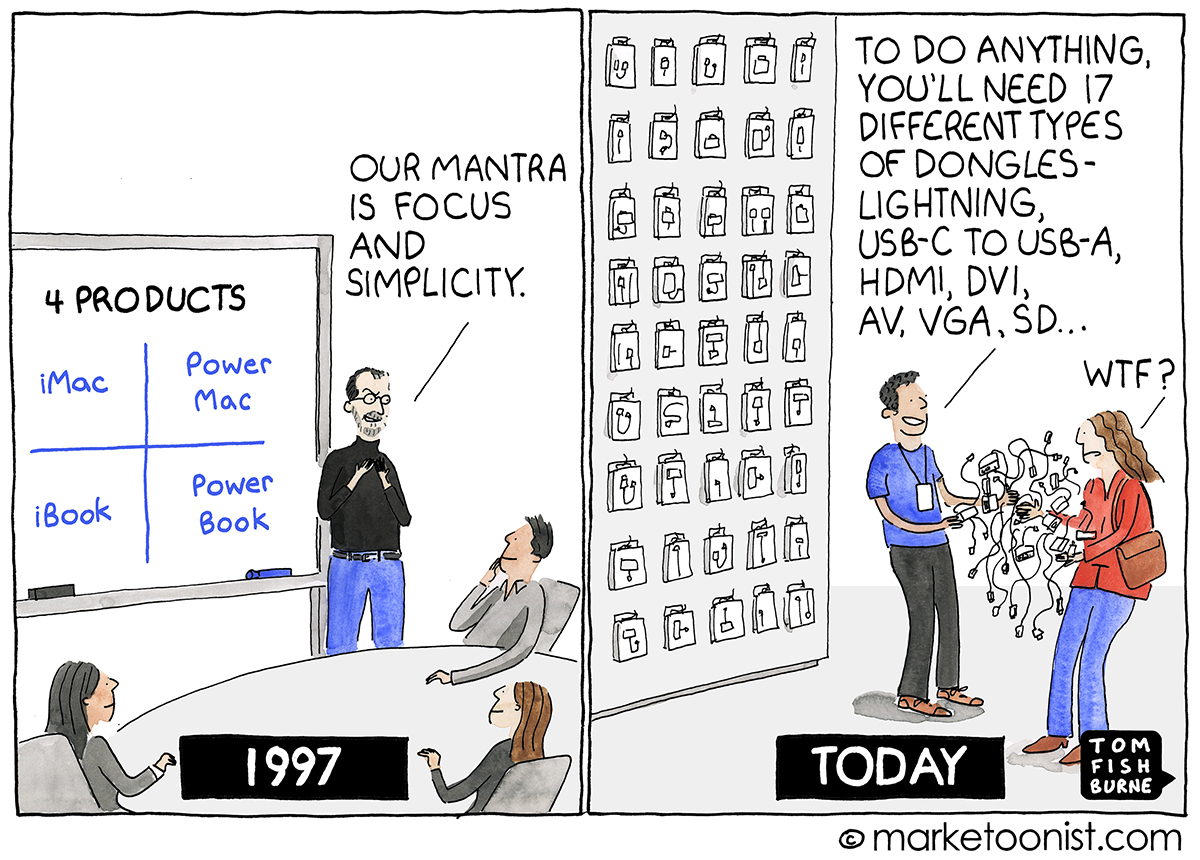
But much of the opportunity is simple positioning and a willingness to limit choices and “do one thing well.”
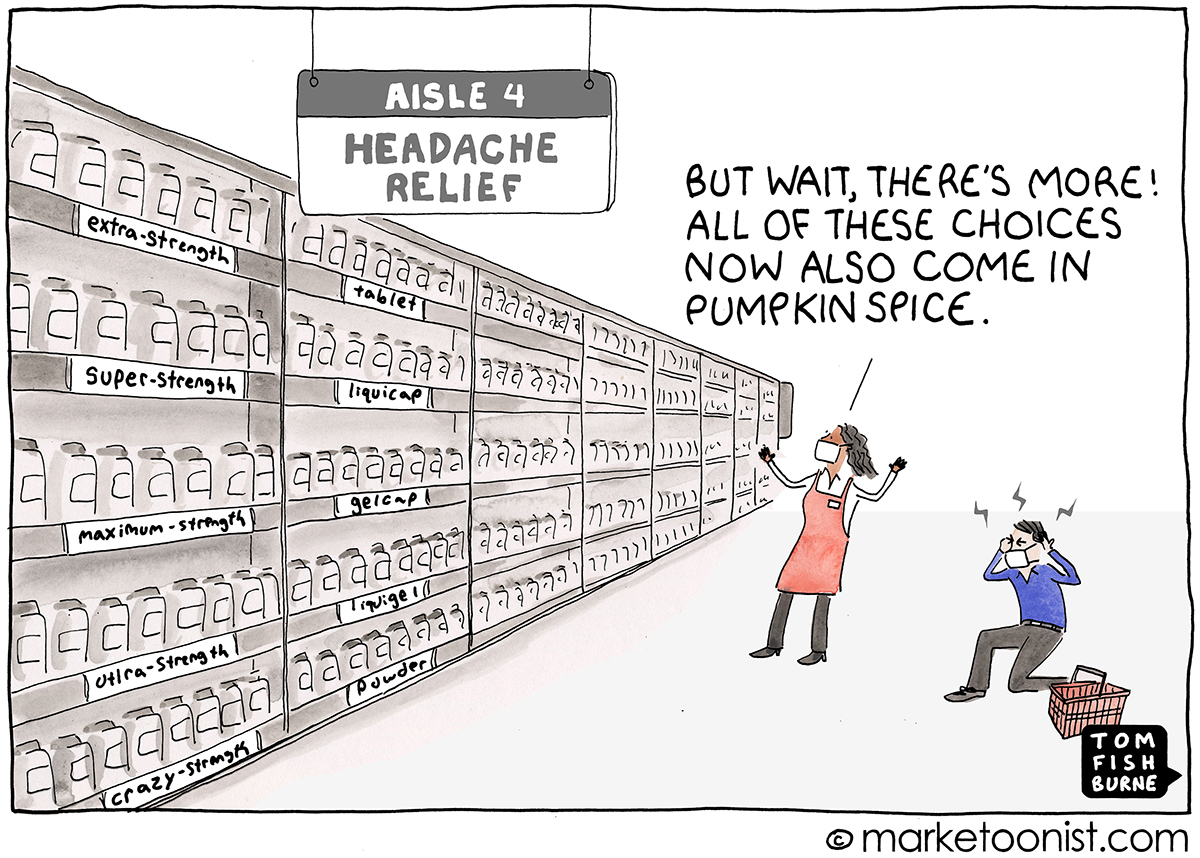
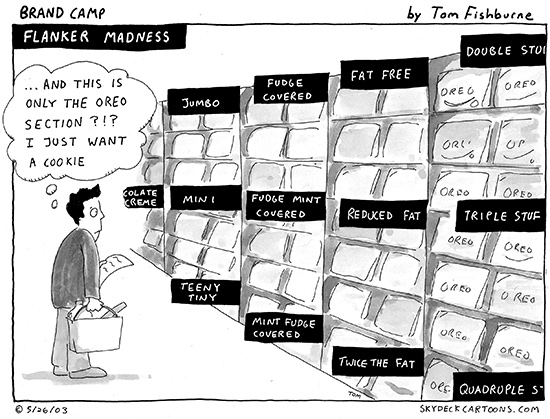
Here are a few related cartoons I’ve drawn over the years: