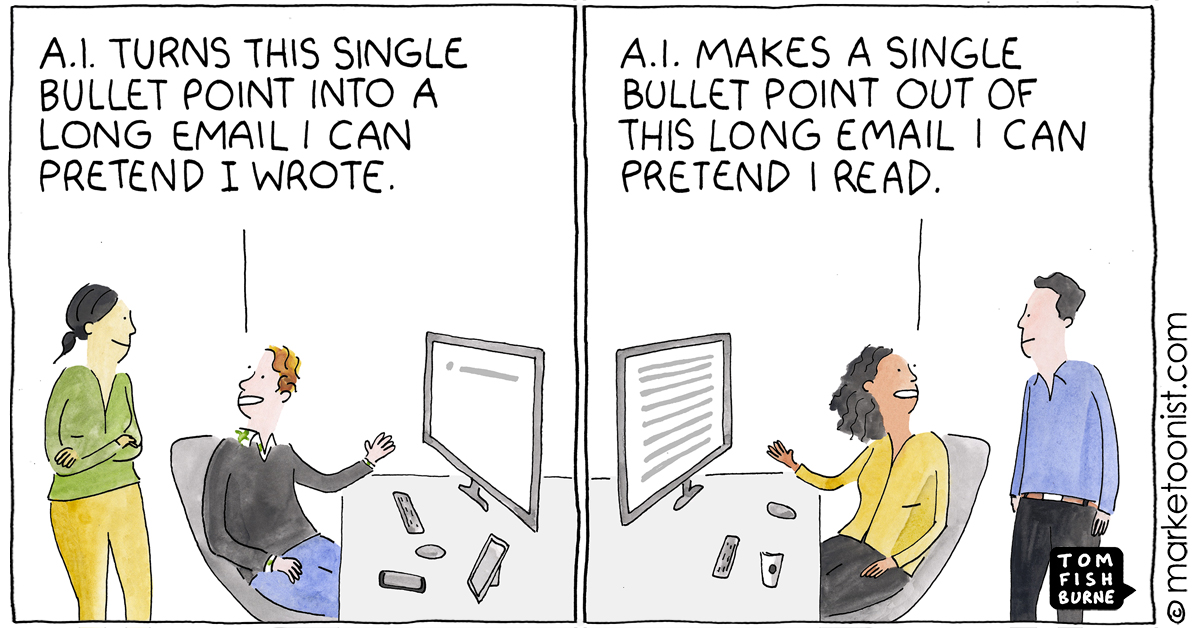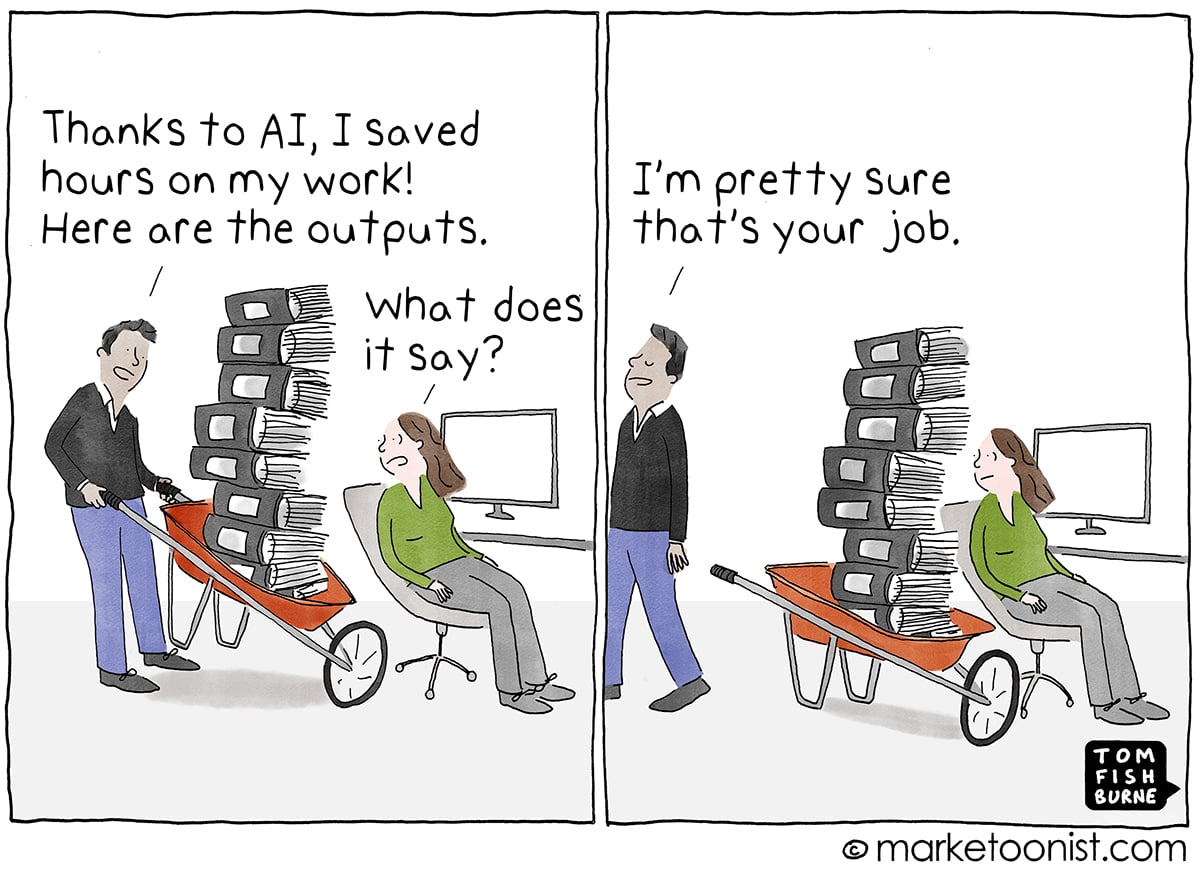
When chasing metrics that reward any type of AI adoption, it’s easy to miss the workslop tax that is being paid underneath the surface.
Last year, BetterUp Labs and the Stanford Social Media Lab introduced the phenomenon of workslop:
“Workslop is AI-generated content that looks polished and complete — but is actually unhelpful, low-quality, or off the mark. It can take the shape of emails, documents, slide decks, or even code. While it may look good on the surface, workslop is often bloated, confusing, or just plain wrong.”
They found that 41% of employees have received “AI-generated workslop” from co-workers in the last month. And 53% admit that some of what they send is workslop.
People spent nearly 2 hours fixing each example of workslop, which is 20 minutes longer than if the sender had done the work themselves.
And half of those who had received workslop from a colleague viewed the sender as “less creative, capable, and reliable.”
Yet the impact is not just on individuals. There can also be a cumulative effect from cycles of workslop in an organization. “Knowledge decay” is how Oxford professor Matthias Holweg and Babson College professor Thomas Davenport diagnosed this in a recent HBR article.
“When slopification happens at scale and in sequence across a business’s processes, those processes themselves—and their outputs—start to deteriorate… Errors compound and pile up. Trust in information erodes.”
As we bumble through this awkward adolescent period of AI adoption, we have to continually question how we use these tools, and who is paying the tax.
Here are a few related cartoons I’ve drawn over the years: