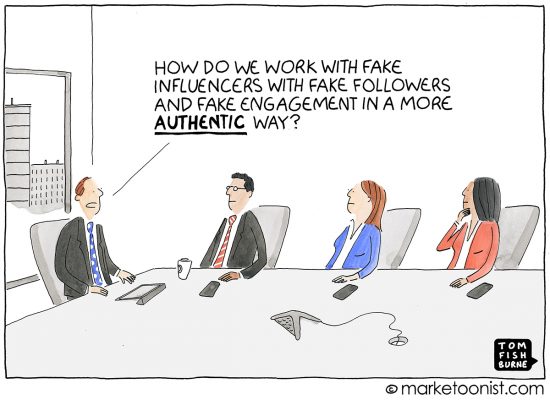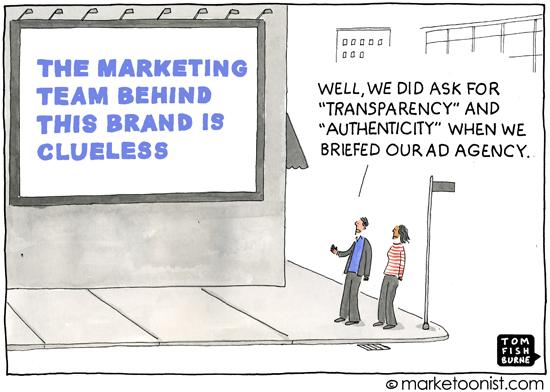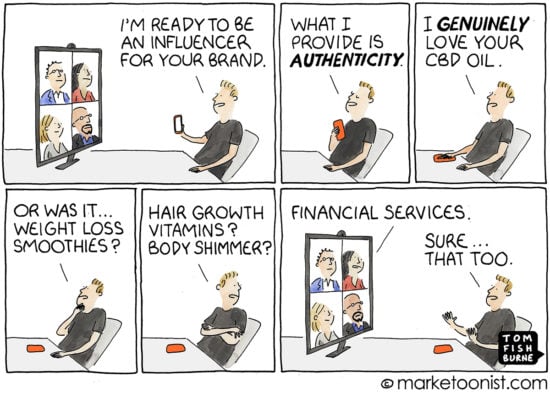

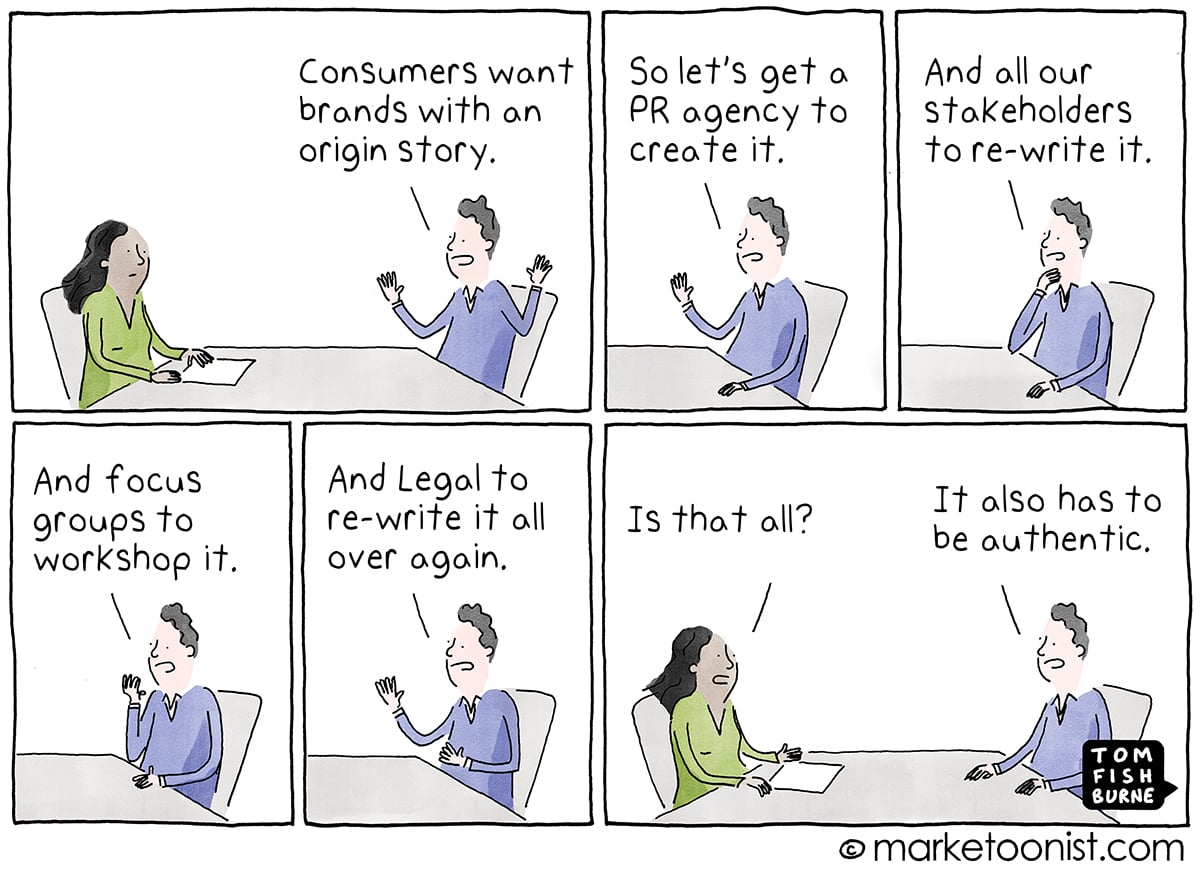
Fake authenticity (or “faux-thenticity”) has long plagued marketing.
Authenticity is set up as a sort of holy grail in branding, marked as an objective in countless creative briefs. The “origin story” in particular is a common lever to manufacture authenticity. Yet most framing of the origin story is heavily scripted, edited, and contrived.
The more that a brand tries to sound authentic, the less that it comes across as authentic.
A 2020 study by Cinelli and LeBoeuf found that what drives authenticity perception isn’t the story itself. It’s whether the brand appears genuinely motivated, or just market-motivated.
In the worst cases, fake authenticity is revealed as fraudulent. My favorite faux-thenticity brand story is the Mast Brothers chocolate scandal from 2015. The Mast Brothers (in standard issue hipster lumberjack beards) had long cultivated an authentic image of small-batch bean-to-bar craftsmanship from their Williamsburg kitchen. This allowed them to charge $10 a bar.
Then a food blogger named Scott Craig wrote a viral expose that revealed the brothers had been melting down premade Valrhona chocolate and repackaging it as original creations. In his article, titled “What Lies Beyond the Beards,” Scott called The Mast Brothers the Milli Vanilli of chocolate.
It’s a cautionary tale I think relevant for every brand. Particularly as AI tools make it easier to project an image of authenticity, what matters more than brand image is what a brand delivers over time.
Seth Godin argues that authenticity is over-rated:
“This pitch that you should be authentic is baloney. No one wants you to be authentic. They want you to be consistent.”
Here are a few related cartoons I’ve drawn over the years:
The signup form could not load. Subscribe here instead.