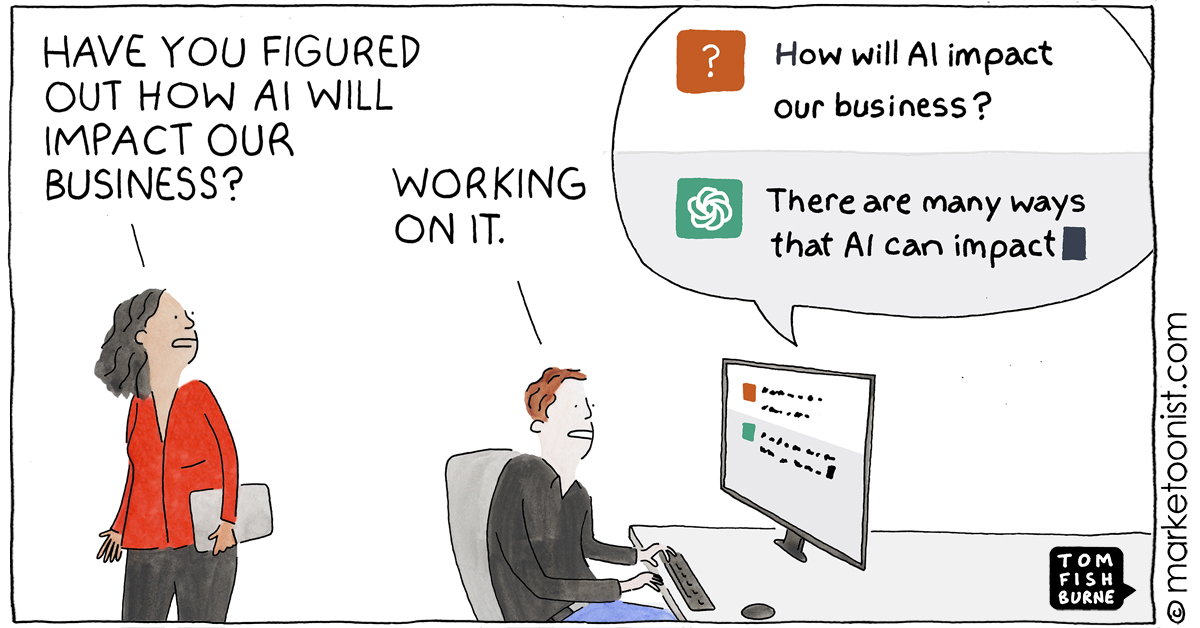
We’re in a strange time of urgency without clarity in AI adoption. The pressure is on to adopt everything everywhere all at once.
A case in point is agentic AI. Suddenly the term “agentic” is used indiscriminately in everything from strategy decks to marketing copy. Even simple chatbots are being called agents. The pace seems driven by hype and panic in equal measure.
Last week, Cisco reported that 80% of executives now believe their company’s “survival” by 2027 will depend on agentic AI.
Also last week, an MIT study chronicled some of the risks of AI agents, summarized by ZD.net as “fast, loose, and out of control”:
“Agentic AI is something of a security nightmare at the moment, a discipline marked by lack of disclosure, lack of transparency, and a striking lack of basic protocols about how agents should operate. The biggest revelation of the report is just how hard it is to identify all the things that could go wrong with agentic AI.”
Google’s DORA research group uses an analogy that I like of AI as an “amplifier”:
“AI doesn’t fix a team; it amplifies what’s already there. Strong teams use AI to become even better and more efficient. Struggling teams will find that AI only highlights and intensifies their existing problems.
“The greatest return comes not from the AI tools themselves, but from a strategic focus on the quality of internal platforms, the clarity of workflows, and the alignment of teams.”
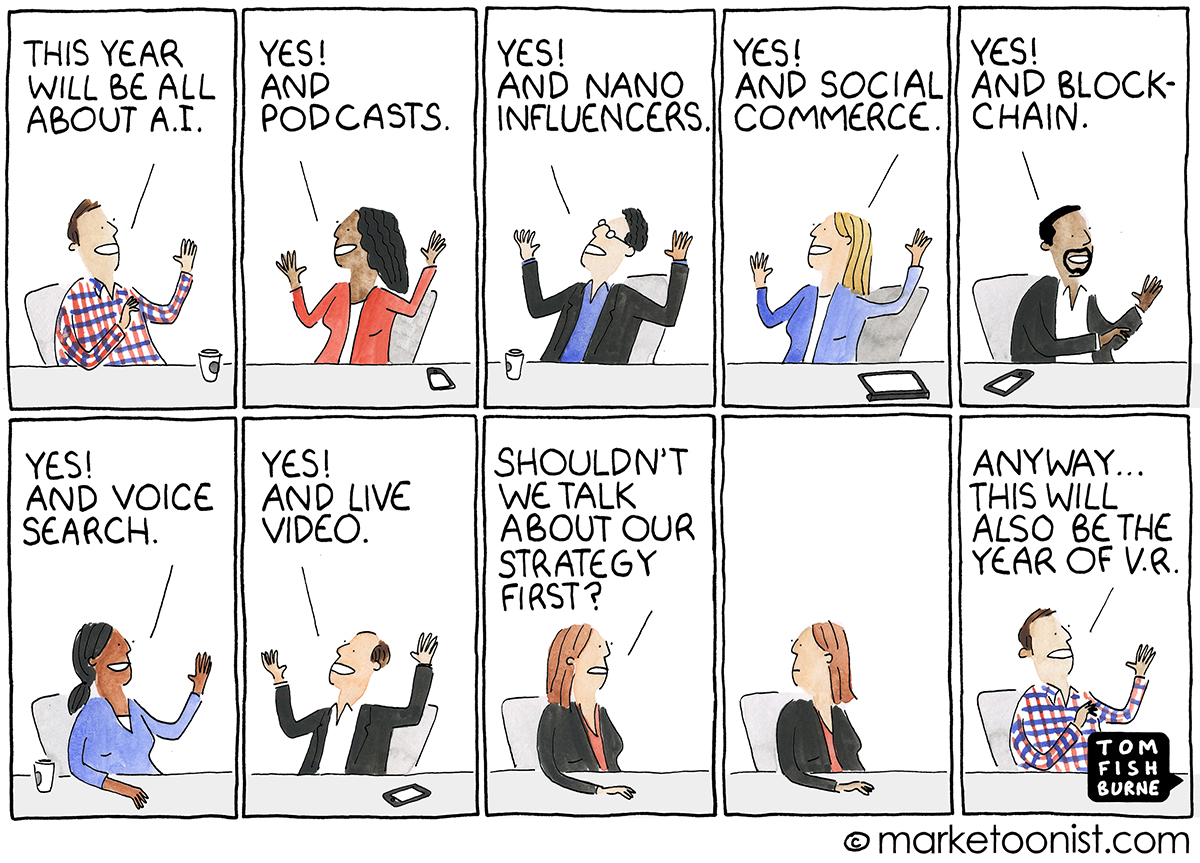
When we feel like we least have time to set a clear strategy is when we most need to make time to set a clear strategy.
Here are a few related cartoons I’ve drawn over the years: