Steve Jobs famously described the computer as a “bicycle for the mind.”
Last week, my old friend Jason Copeland invited me to join a Silicon Valley roundtable he moderated with a fascinating topic:
“Will AI be a bicycle for the mind? Or an autopilot to which we passively delegate human judgment and creativity?
“We’re biologically hardwired to adopt tools that free us for other work. Yet unlike calculators or GPS, AI is a general-purpose ‘thinking’ tool that threatens to offload core aspects of human cognition, judgment, and learning.
“Over-reliance risks atrophying our critical thinking skills.”
The gathering brought together a small group of big tech leaders, startup founders, designers, investors, journalists (and one cartoonist) to talk about some of these implications of AI on work and society.
I left with a greater sense of urgency on how quickly AI will impact the nature of work. And also an appreciation for the level of soul-searching needed to figure out how to use AI as a “bicycle of the mind” not an “autopilot.”
Axios CEO Jim VandeHei wrote a personal letter to his kids about AI that he shared publicly last week. It included this line:
“Saddle up and figure out fast how to turn AI into a force multiplier of your dreams.”
In a later video, he expanded on this idea:
“[Use AI as] an extension of the work that you do. Don’t let it be a replacement. Otherwise you’re just going to be a boring lemming. And no one’s looking for boring lemmings. So you want to keep what makes you unique. Use AI as a force multiplier.”
Whether AI is a “bicycle of the mind” (force multiplier) or an “autopilot” (replacement) will depend on how we choose to use it.
The path of least resistance is homogeneity when everyone has access to the same tools. Leveraging AI in novel ways requires novel human thinking.
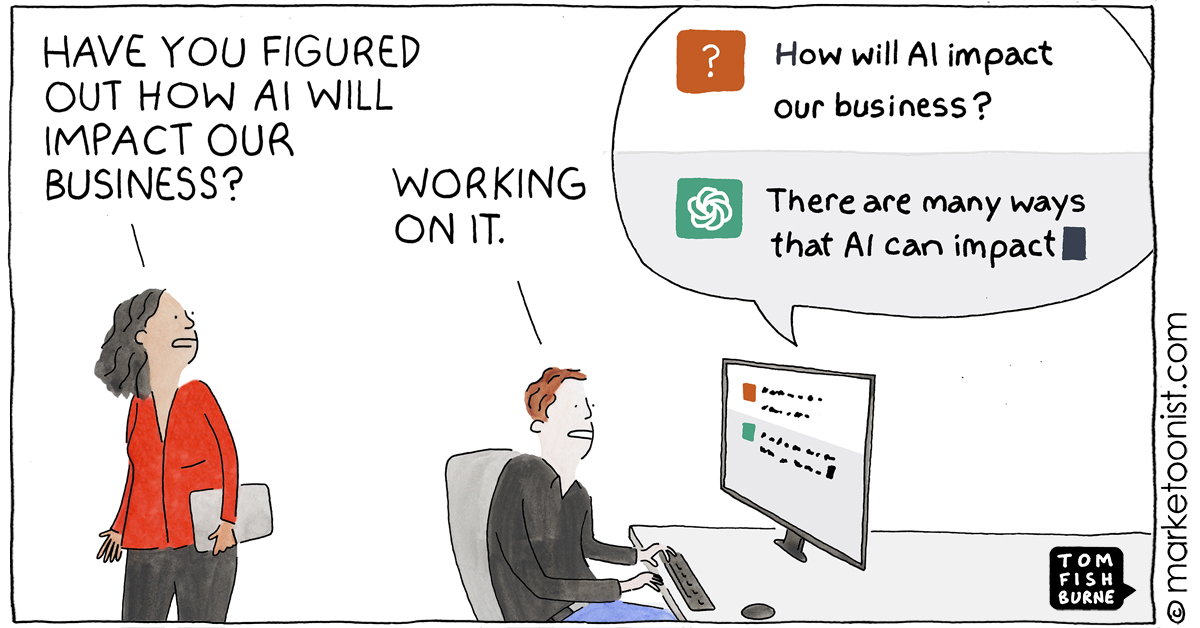
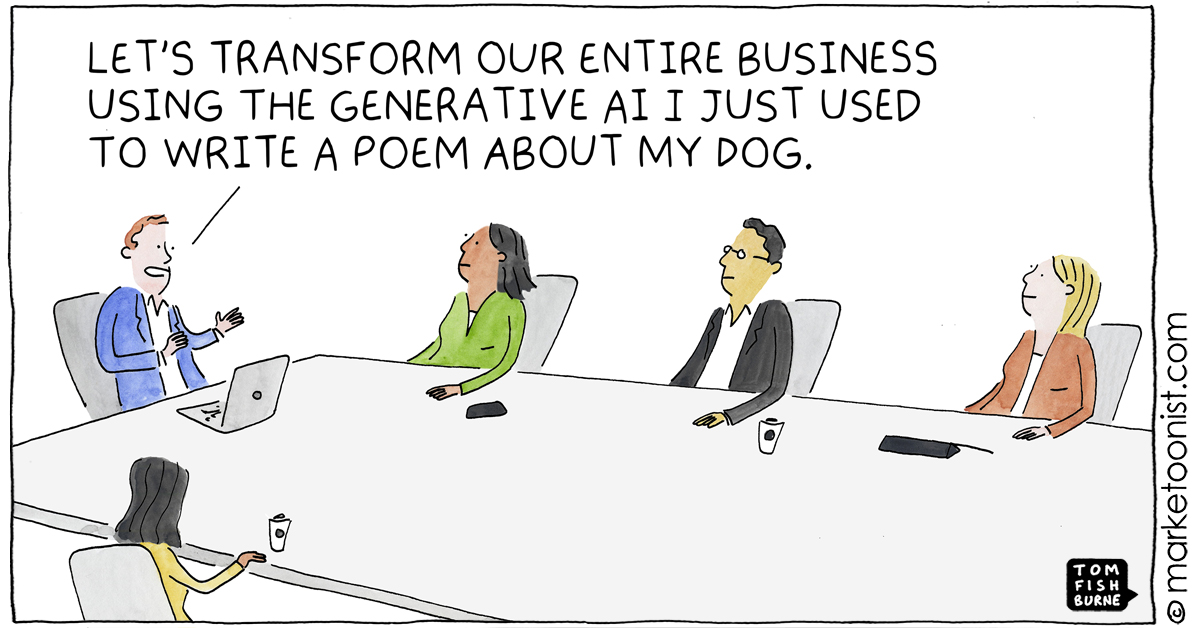
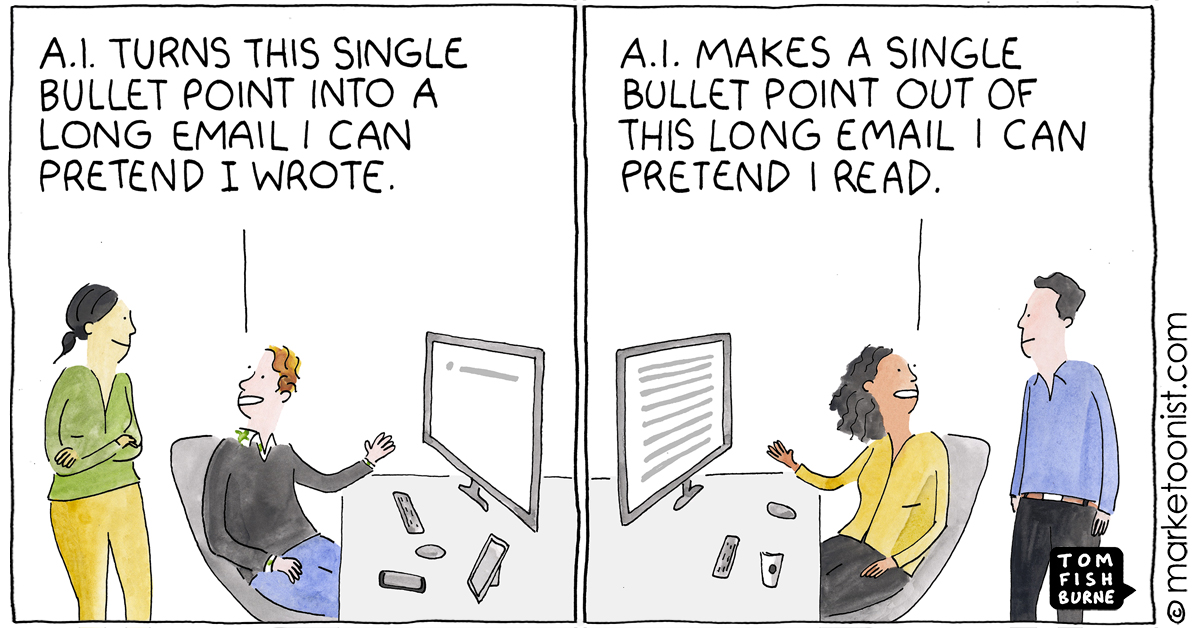
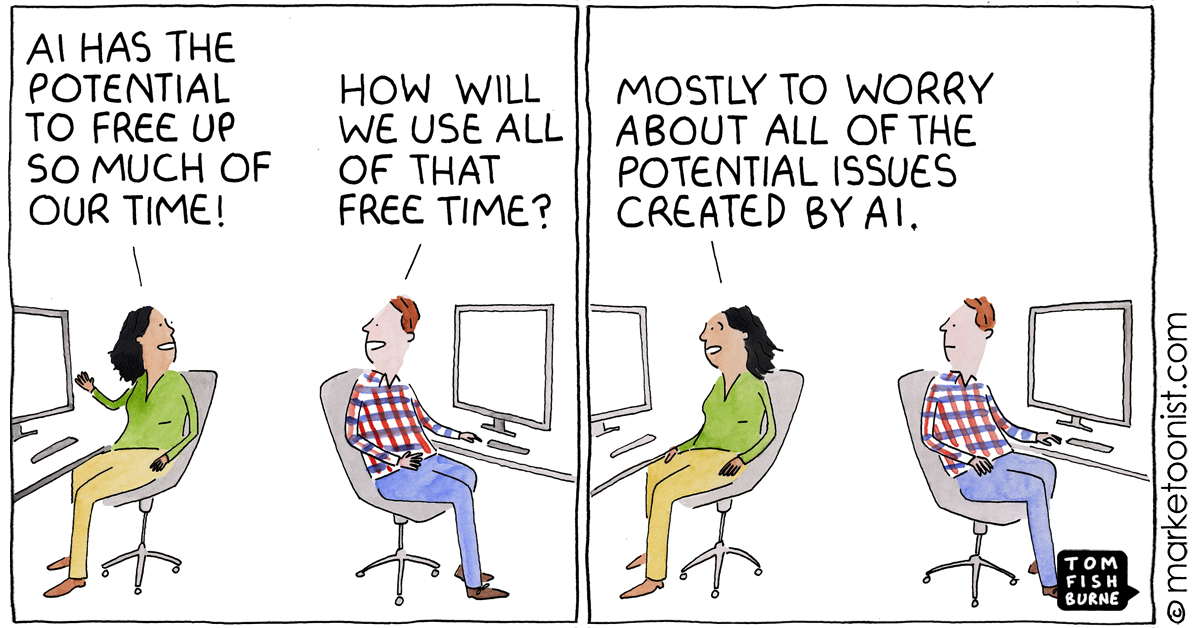
Here are a few related cartoons I’ve drawn over the years: