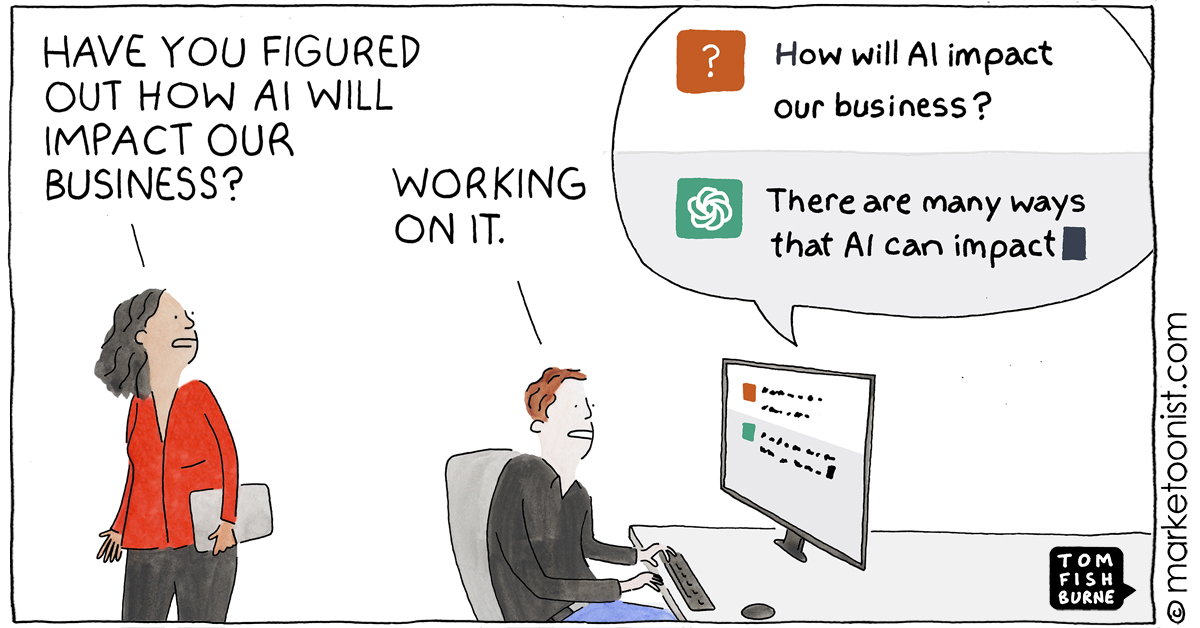
GenAI prompts are getting pushier. From productivity apps to search to social media, users have to navigate a constant array of pop-ups, tooltips, and moving icons pushing GenAI features for just about every task.
And yet the result is not automatically better output or higher productivity.
BetterUp Labs and Stanford Social Media Lab recently published research in the Harvard Business Review on what they call “The Workslop Tax.”
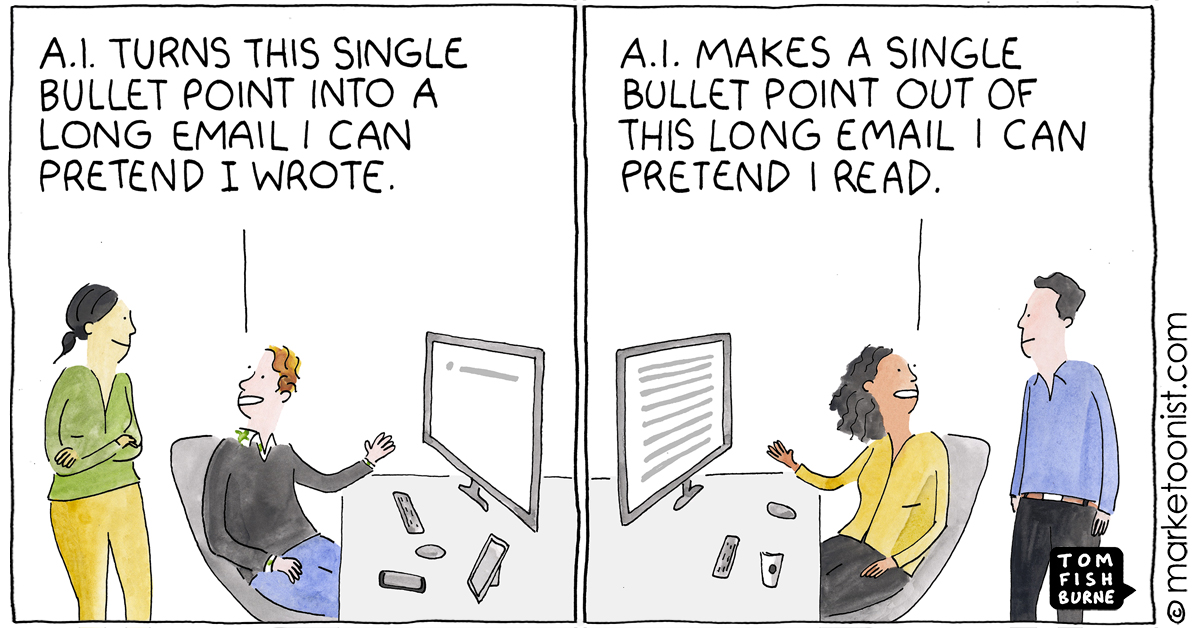
“We define workslop as AI generated work content that masquerades as good work, but lacks the substance to meaningfully advance a given task.
“As AI tools become more accessible, workers are increasingly able to quickly produce polished output: well-formatted slides, long, structured reports, seemingly articulate summaries of academic papers by non-experts, and usable code.
“But while some employees are using this ability to polish good work, others use it to create content that is actually unhelpful, incomplete, or missing crucial context about the project at hand. The insidious effect of workslop is that it shifts the burden of the work downstream, requiring the receiver to interpret, correct, or redo the work. In other words, it transfers the effort from creator to receiver.”
They found that 40% of US employees have received workslop in the last month. And that 15% of the content these employees receive qualifies as workslop.
One of their conclusions:
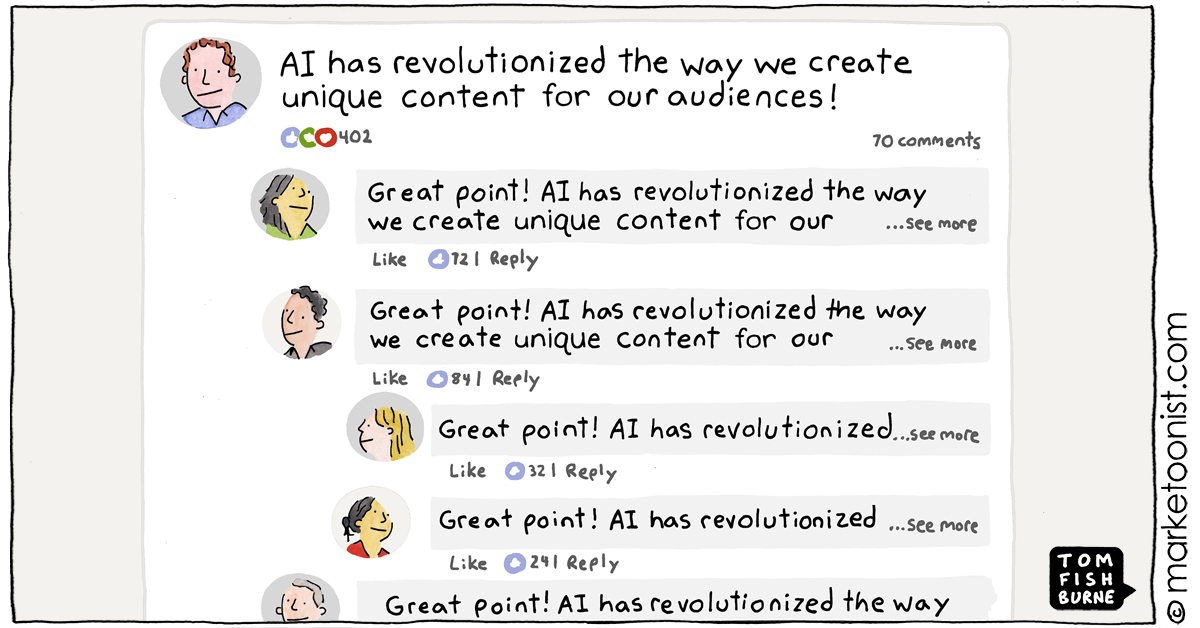
“Indiscriminate imperatives yield indiscriminate usage. When organizational leaders advocate for AI everywhere all the time, they model a lack of discernment in how to apply the technology.”
I love how designer Frank Chimero suggests we think of AI less as a tool and more as an instrument:
“Thinking of AI as an instrument recenters the focus on practice. Instruments require a performance that relies on technique—the horn makes the sound, but how and what you blow into it matters; the drum machine keeps time and plays the samples, but what you sample and how you swing on top of it becomes your signature.
“In other words, instruments can surprise you with what they offer, but they are not automatic. In the end, they require a touch. You use a tool, but you play an instrument. It’s a more expansive way of doing, and the doing of it all is important, because that’s where you develop the instincts for excellence.
“There is no purpose to better machines if they do not also produce better humans.”
Here are a few related cartoons I’ve drawn over the years: