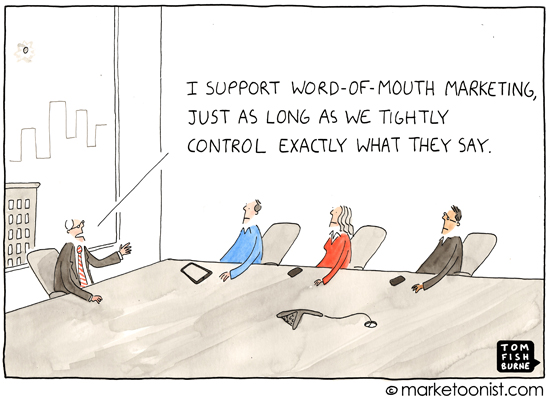


In 2013, I drew a cartoon with an executive telling his colleagues, “I support word-of-mouth marketing, just as long as we tightly control exactly what they say.”
That tension of control and letting go has long been a tricky one for marketers to navigate, both inside and outside a company.
I’ve been thinking about that sentiment in the context of Unilever’s recent huge bet on influencer marketing (spending 50% of media on social channels and increasing influencer marketing investment 20X).
The WSJ reported this week that Unilever is investing in a custom AI content generation platform to generate thousands of personalized brand assets to arm their influencers.
But ultimately, social-first marketing represents a massive shift in control.
Last year, I heard Zaria Parvez, senior social media manager at Duolingo, give a talk about what she calls their “unhinged” approach to TikTok, which grew under her watch from 50,000 followers to 16M+, largely by having the freedom to experiment (including killing off their own mascot earlier this year).
As Zaria described that freedom in a recent interview:
“This is a two-day cycle, and then we approve the content within the team ourselves, so we’re not waiting for senior leadership to say yes or no…
“Even if everyone internally is not happy, if it’s good for the brand and people think it’ll lead to impressions and lead to impact, then we move forward with it.”
I once spoke at a marketing summit hosted by Procter & Gamble. One of their attorneys talked about the challenge of balancing experimentation with safeguards at the speed of social media.
She shared a model that resonated with me called “freedom within a framework.” Both are needed, she said. A brand with no freedom can stagnate. A brand with no framework can lose itself.
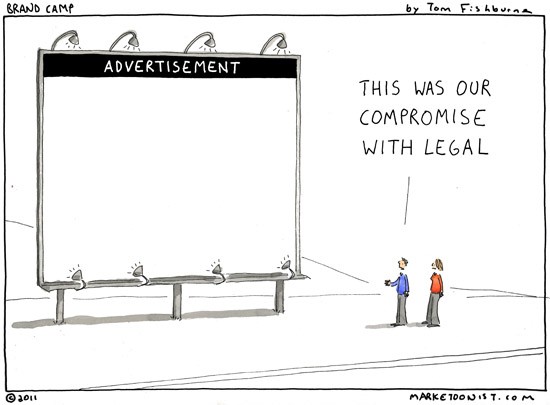
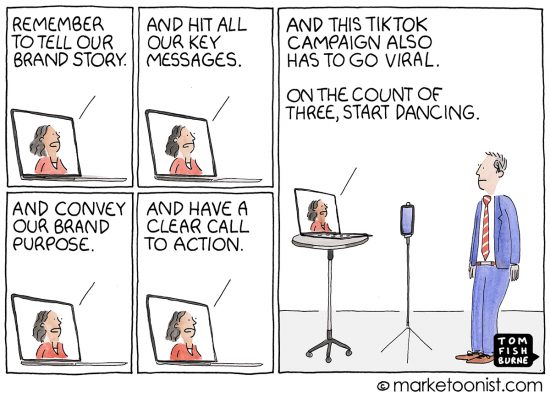
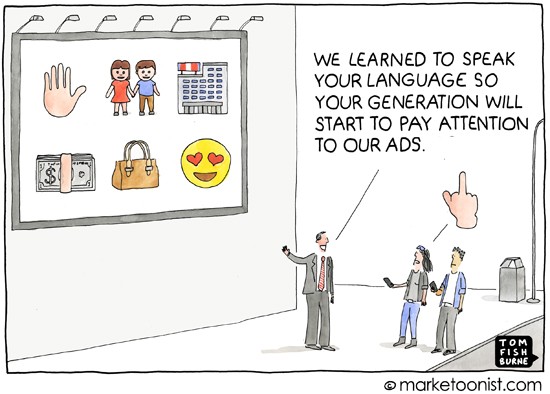
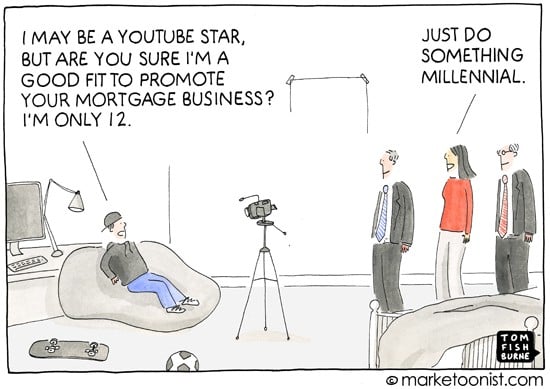
Here are a few related cartoons I’ve drawn over the years:
The signup form could not load. Subscribe here instead.