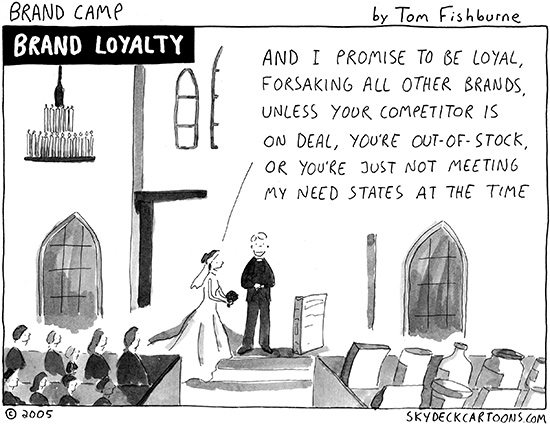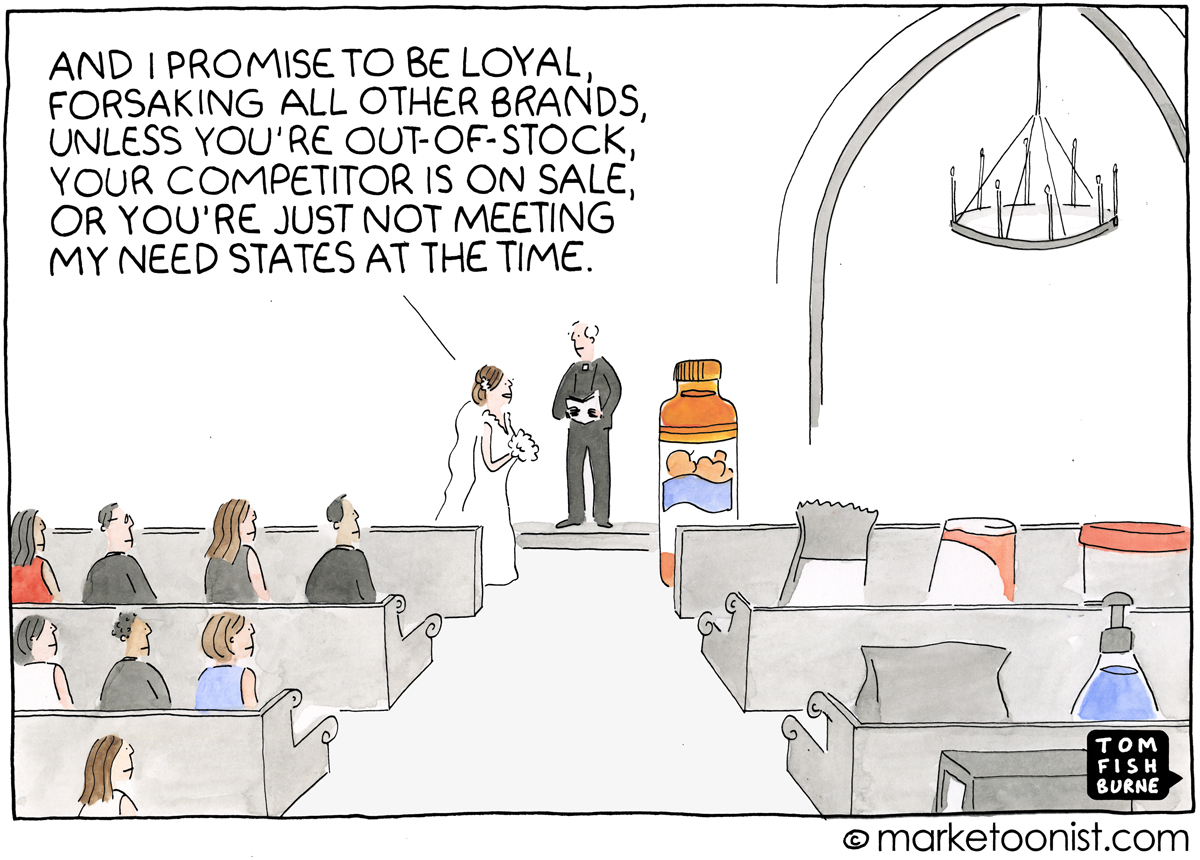
In 2005, I drew a cartoon with a consumer and a brand tying the knot in a wedding ceremony. In her vows, the consumer says:
“And I promise to be loyal, forsaking all other brands, unless your competitor is on deal, you’re out-of-stock or you’re just not meeting my need states at the time.”
That cartoon was partly inspired by seeing Saatchi & Saatchi’s then CEO Kevin Roberts give a talk at General Mills (where I worked at the time). Kevin was promoting his newly published book, Lovemarks, about the opportunity for brands to cultivate “loyalty beyond reason.”
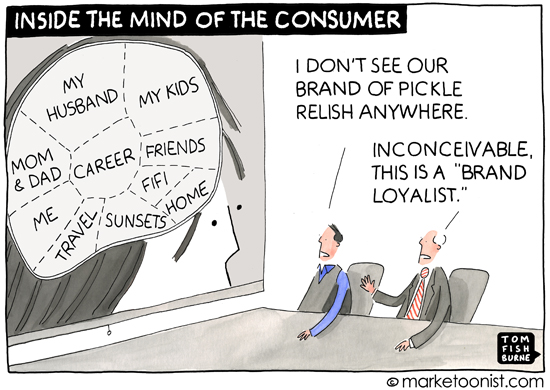
It made me laugh to think about consumers “in love” with brands, when most consumers don’t think about brands as much as marketers think they do.
Byron Sharp at the Ehrenberg-Bass Institute challenged the myths of brand loyalty and “brand love” in particular. He found that consumers tend to be loyal to a repertoire of brands and “loyalty is often more a function of habit, familiarity and lack of caring rather than unbound devotion.”
Or as Andrew Ehrenberg famously put it:
“Your customers are the customers of other brands who occasionally buy you.”
Rather than push for “loyalty beyond reason,” they urged marketers to focus on what was classically known as “brand salience” — the likelihood that a brand comes to mind in buying situations. Ehrenberg-Bass codified and expanded brand salience as “mental availability” as they brought actually scientific inquiry to marketing as a science.
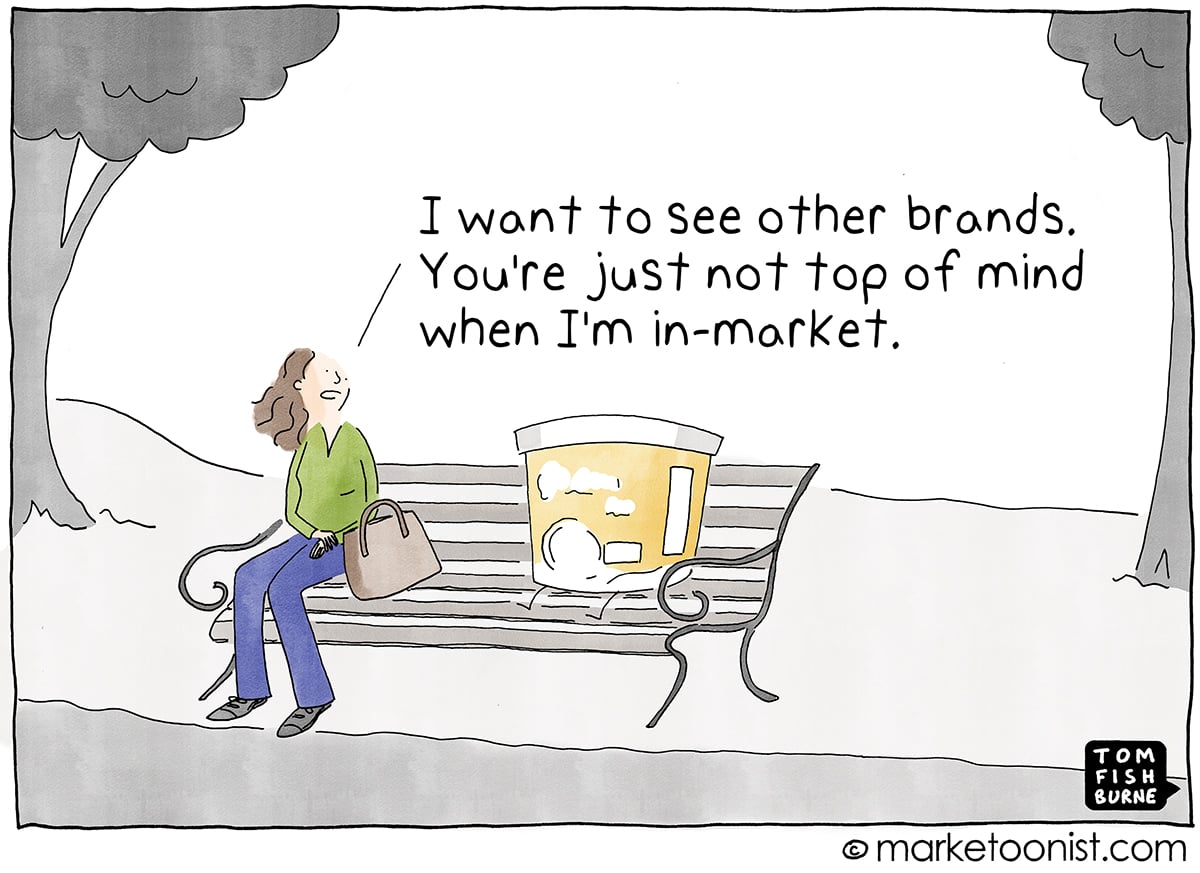
“Mental availability” may not be as romantic as brand love, but it’s the difference between being top of mind and being left on the bench.
Here are a few related cartoons I’ve drawn over the years: