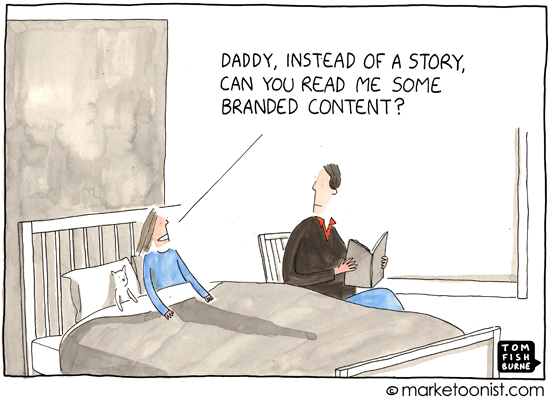
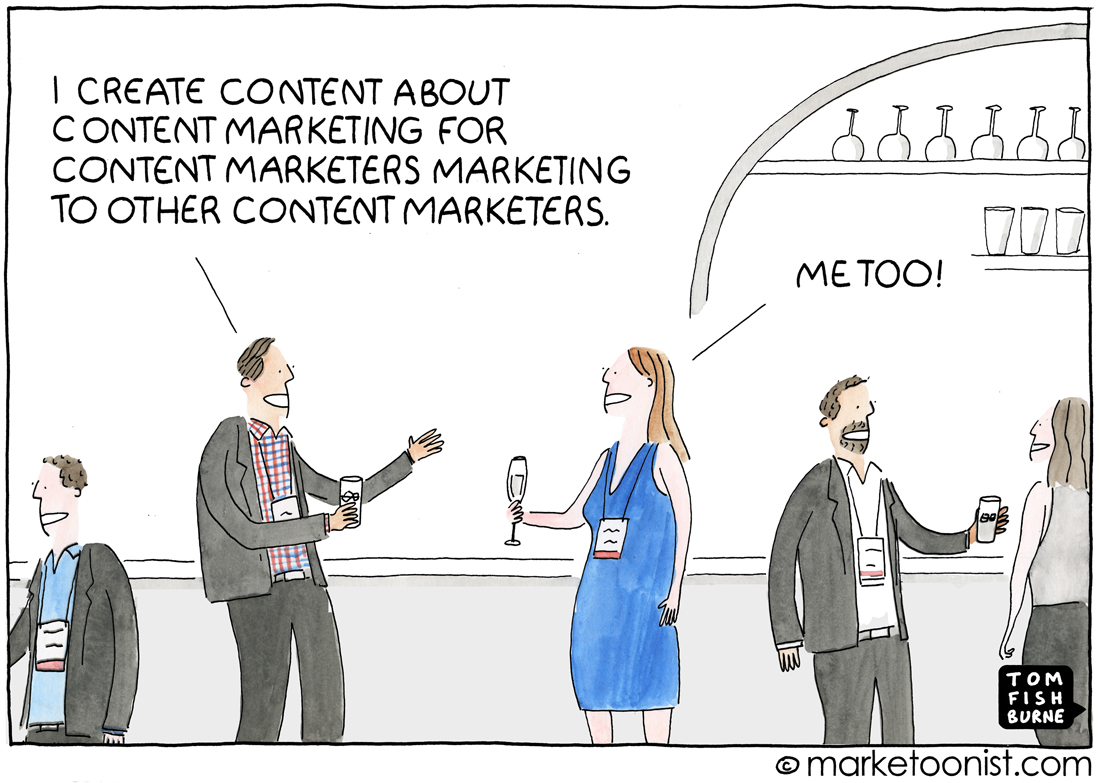
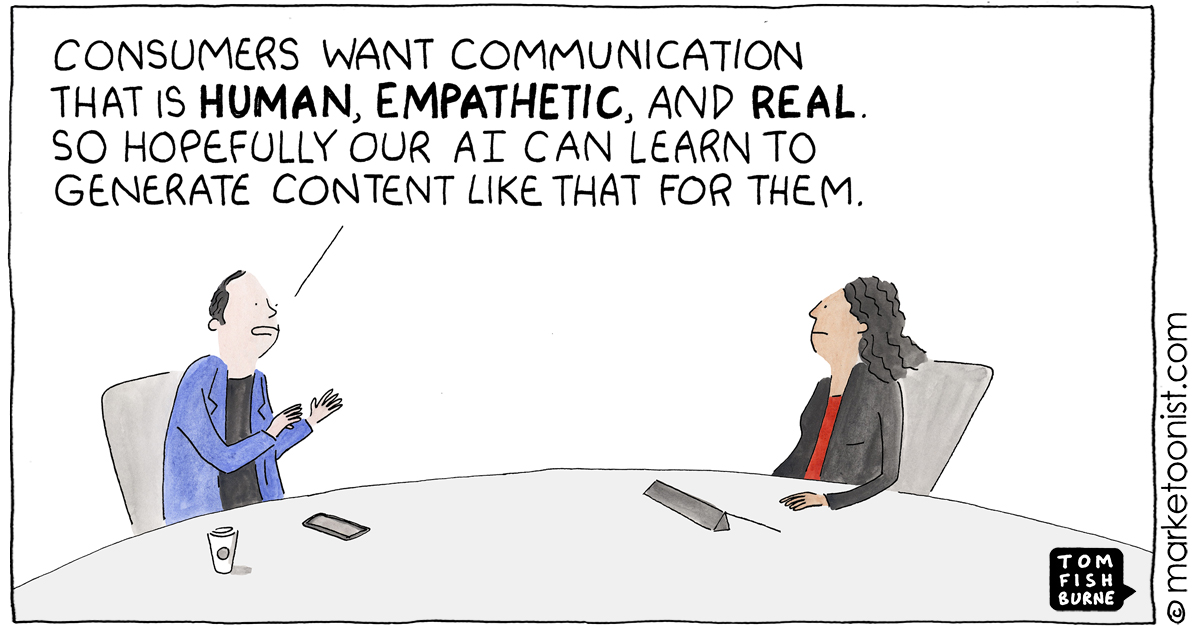
I’ve never been that comfortable with the term “content”, even though I use it like everyone else. Ad exec Dave Trott once gave voice to some of what bugs me about calling it “content”:
“Content (noun): everything that is inside a container; the contents of a box.”
“So there it is: we’re in the shipping business. That’s what happened to what we used to call ‘the idea.’ The idea has become whatever goes into the box: just content. It could be anything, it’s not important… Content is seen as just stuff. The stuff that goes into the space that’s there to be filled…
“And there’s my problem with the word ‘content.’ It doesn’t matter what the content is. The content is now just something to fill up the space.”
Dave made that observation in 2015, even before the rise of AI-generated tools made content scalable and personalized and at the volume of a firehose.
But there are watch-outs to that approach. A new study from ad network Raptive is the first I’ve come across that explored consumers perceptions of AI-generated content and brands. They found that trust in content dropped nearly 50% when participants suspected it was generated by AI.
That perception also led to a 14% decrease in purchase consideration and willingness to pay for the associated brands (those sponsoring the content or advertising near it). The term some are using for this phenomenon is “AI stink.”
What’s particularly interesting is that the drag occurs if the content is suspected of using AI, even if it wasn’t. Even before AI tools, many brands were guilty of churning out high volumes of low-quality content. Proctor & Gamble CMO Marc Pritchard once described this approach as the “content crap trap” and encouraged brands to avoid falling into it.
AI tools are only as good as how they’re used. The path of least resistance is a race to the bottom. There’s an opportunity to raise the bar. We can’t break through the clutter by adding to it.
Here are a few related cartoons I’ve drawn over the years: