
A clear, concise positioning statement is the starting point of branding and marketing. It creates consistency when consumers see an ad, pick up a product, talk to a salesperson, or visit a store.
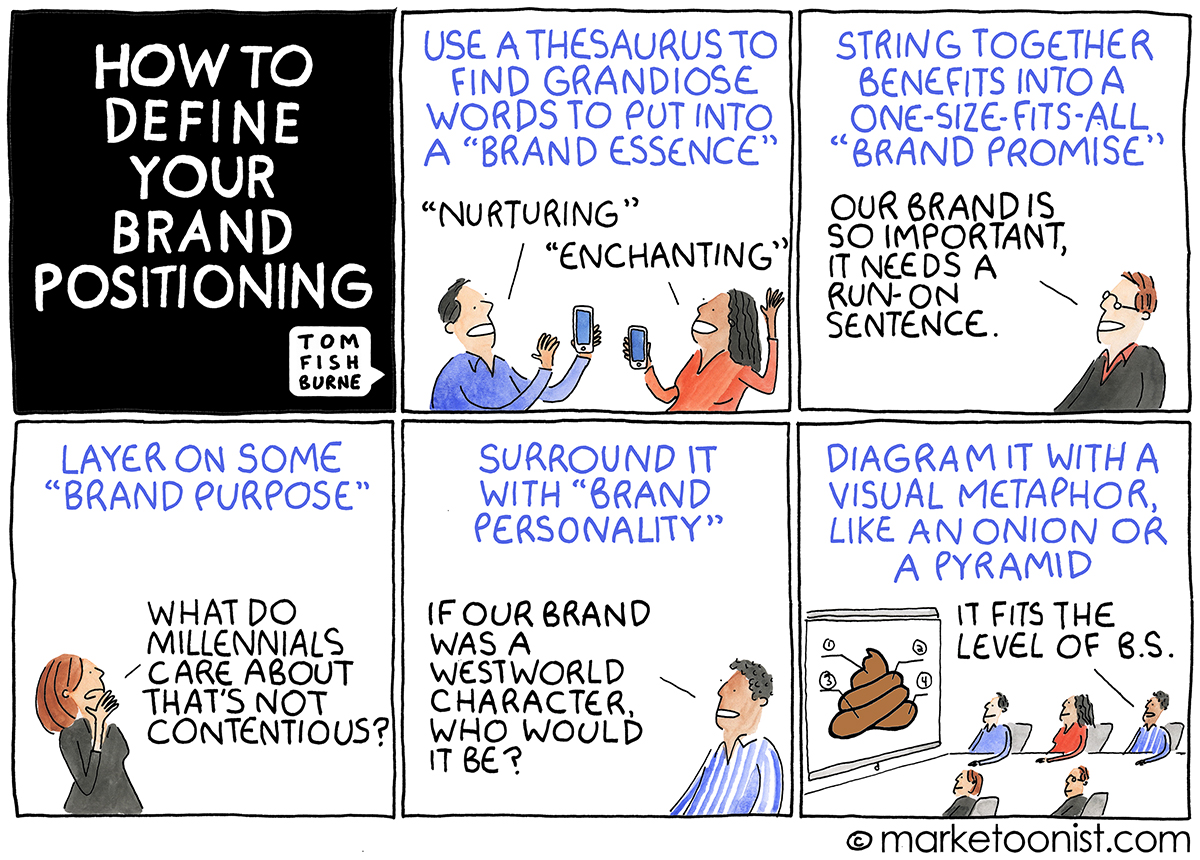
Yet many positioning efforts are far from clear and concise. Encapsulated in elaborate diagrams as brand onions, brand keys, brand pyramids, brand architectures, brand unicorns, etc., the positioning statements of many brands spin out concentric circles of complexity. They may look substantial tacked to the wall or attached to a creative brief, but they frequently fall short in guiding actual decision-making.
We should be able to hand a brand positioning statement to anyone in our organization or partners and find they can understand it without a dictionary or a PhD.
I like how Mark Ritson once framed how to evaluate your brand positioning:
“The greatest initial test for brand positioning is whether your brand manager can remember it unaided. Then ask your chief executive. Then ask the porter from downstairs who meets more customers than your chief executive and brand manager combined. If all three come up with the same basic concept, you are in the 1% of companies who are in with a chance of brand-building.”
Here are a couple related cartoons I’ve drawn over the years.
“Brand Onion” June 2007

“Brand Laddering” June 2012