

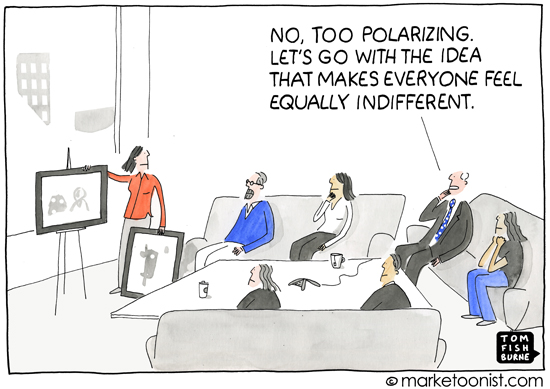
Labeling an idea polarizing can be the marketing kiss of death. Businesses often avoid ideas that are polarizing, whether new products, ad campaigns, or promotions. It’s always easier to launch the next flavor of vanilla.
But there’s power in polarization. If you try to appeal to everyone, you won’t necessarily appeal to anyone in particular. In a world of clutter, the last effect a brand can afford to create is indifference.
The poster brand of polarization is Marmite, the classic yeast food spread in the UK. Their brand platform is literally, “love it or hate it,” an insight they’ve been tapping for 20 years.


Many product categories turn into a sea of sameness over time. But you can’t out-vanilla vanilla. There’s opportunity in many categories to take more of a Marmite approach to marketing.
I like this quote from Guy Kawasaki:
“Don’t be afraid to polarize people. Most companies want to create the holy grail of products that appeals to every demographic, social-economic background, and geographic location. To attempt to do so guarantees mediocrity. Instead, create great products that make segments of people very happy. And fear not if these products make other segments unhappy. The worst case is to incite no passionate reactions at all, and that happens when companies try to make everyone happy.”
I’d love to hear your thoughts on the polarization in marketing.
(Marketoonist Monday: I’m giving away a signed cartoon print. Just share an insightful comment to this week’s post by 5:00 PST on Monday. Thanks!)